
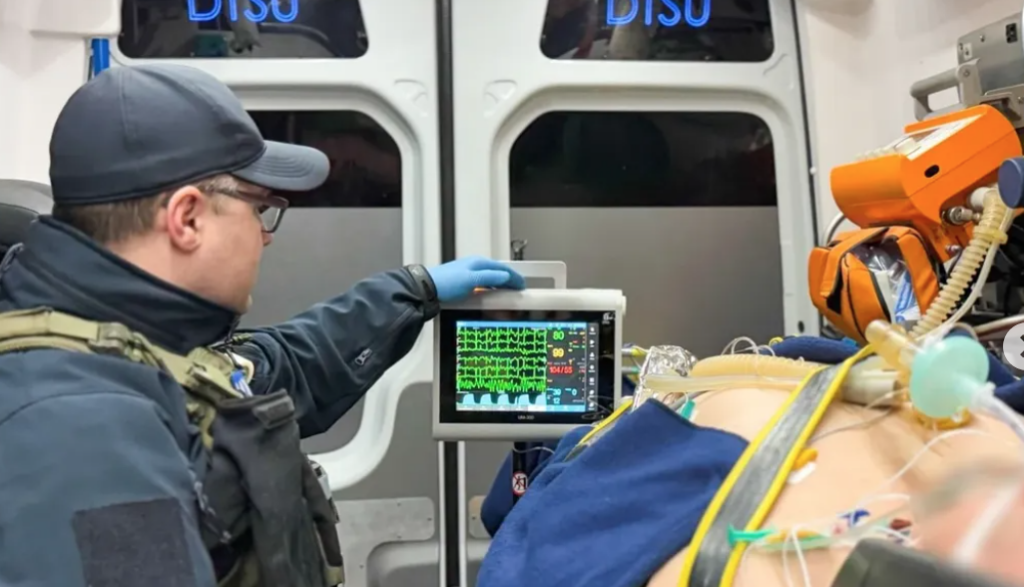
With Insights from Dr. Inna Demiter, MOAS Ukraine
As we commemorate World Health Day 2025, we reflect on the challenges of delivering healthcare in areas ravaged by conflict. In war zones, hospitals are destroyed, supply chains are disrupted, and medical personnel face danger. This article delves into the realities of medical aid in conflict zones, explores groundbreaking innovations, and shares insights from Dr. Inna Demiter, an anesthesiologist with MOAS’s Ukraine evacuation team.
The Harsh Reality of Healthcare in Conflict Zones
Healthcare systems are often among the first casualties of war. In conflict zones such as Sudan, Ukraine, Syria, and Yemen, hospitals are bombed, medical supplies are looted, and trained professionals are forced to flee or work under constant threat. Disease outbreaks such as cholera and tuberculosis spread rapidly due to overcrowded refugee camps and the lack of clean water and sanitation facilities.
Dr. Demiter offers a firsthand account of the challenges faced by medical teams on the frontlines in Ukraine: “We transported a fighter who waited 240 hours for evacuation with a tourniquet applied due to massive bleeding. Tactical conditions didn’t allow reassessment or adjustment of the tourniquet, leading to an eventual amputation at the highest level of medical care.”
She explains: “Attacks by FPV drones impede and make it impossible to evacuate wounded soldiers in a timely manner. Every hour of delay means a deterioration in the general condition of the wounded and a delay in specialised medical care.” Nevertheless, our brave Ukrainian team has not lost a single patient in three years of operations, with nearly 70,000 patients evacuated.
Innovations Transforming Medical Aid
Technological advancements are offering new hope for healthcare delivery in conflict zones, helping to overcome some of the challenges.
- Portable Medical Devices
Portable devices have revolutionised field medicine by enabling diagnostics and treatment in remote or dangerous areas:
- Portable Ultrasound Scanners: These handheld devices enable medics to diagnose internal injuries quickly, the need for large hospital equipment. Dr. Demiter states, “The use of portable ultrasound scanners in ambulances allows us to diagnose pathological conditions on time, monitor treatment results, and adjust them accordingly.”
- Gas Analyzers: These compact tools measure acid-base balance and electrolyte levels directly in ambulances or field hospitals and “help identify disorders at the level of role 1 or role 2 care settings and treat them accordingly.”
- Mobile Field Hospitals: These self-contained units come equipped with operating rooms, ICUs, and diagnostic tools like X-ray machines. They provide life-saving care even in areas with no permanent medical facilities.
- Telemedicine
Telemedicine has emerged as a game-changer for delivering expert care remotely:
“Telemedicine is being used in crisis areas,” says Dr. Demiter. “It allows the wounded to receive better medical care even in bad conditions.”
Through satellite networks and solar-powered systems, telemedicine connects patients with specialists who can guide diagnosis and treatment remotely.
- Blockchain for Health Records
Blockchain technology guarantees secure storage and transfer of patient data across disrupted systems. In conflict zones where hospitals are destroyed or inaccessible, blockchain enables continuity of care by maintaining decentralised records. This technology is particularly beneficial for displaced populations who need consistent treatment across multiple locations.
- AI Diagnostics
Artificial intelligence (AI) is increasingly being used to fill gaps left by medical staff shortages. In Sudan, for example, AI interprets X-rays by comparing patient images with stored datasets to provide accurate diagnoses. Such innovations reduce dependence on human expertise while maintaining high diagnostic accuracy.
What’s Still Needed?
While these innovations have made significant strides, challenges remain. These newer technologies and equipment are often more expensive and, therefore, harder to get, especially for often underfunded humanitarian organisations.
Dr. Demiter emphasises the urgent need for additional equipment in Ukraine: “Ukraine needs lung ventilators with turbines and built-in concentrators, transport monitors, gas analyzers, portable ultrasound scanners, perfusers, and all kinds of supplies. We also need to upgrade our vehicle fleet for faster evacuations.”
Beyond equipment, international cooperation is crucial for ensuring safe access for medical teams under international humanitarian law.
A Call to Action
As we observe World Health Day 2025, Dr. Demiter leaves us with a poignant reminder:
“The best treatment for a disease is prevention… The best way to save lives is to remove the threat.”
In conflict zones worldwide, healthcare professionals like Dr. Demiter embody resilience and innovation under unimaginable circumstances. By supporting advancements like portable devices, telemedicine, blockchain technology, and AI diagnostics and ensuring protection for medical personnel, we can help save lives.
This World Health Day is a call to action: let’s invest in solutions that ensure healthcare reaches everyone!
Your support can make a difference. Please consider donating to help us continue our missions and save lives. Visit www.moas.eu/donate to contribute. For more updates on our work, follow us on social media, sign up for our newsletter, or contact us at [email protected].