Have you ever imagined spending time abroad but felt unsure about where to start?
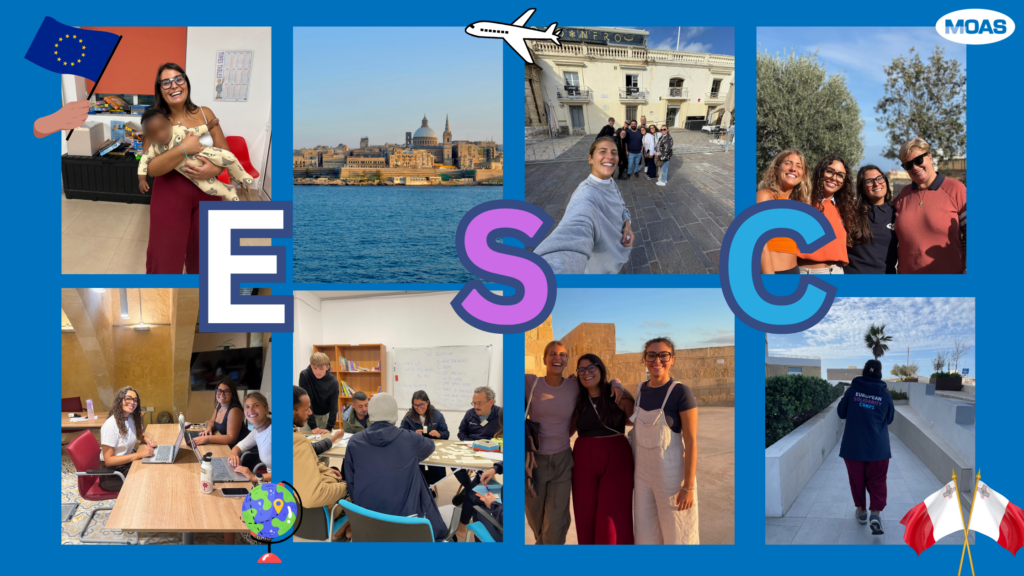
Today we want to share our experience of the European Solidarity Corps (ESC), an European volunteering platform that connects young people between 18 and 30 with fully funded in-person placements across Europe and beyond.
The programme allows young people from member states and partner countries to experience a new culture while gaining skills and life experience by moving abroad to join a host organisation for a period ranging from two weeks to a full year. Placements vary on types of activities, environments and skills training based on their work and opportunities on offer, but the focus is always on learning, work experience and personal development, which can be aligned with personal interests and professional ambitions.
Every year at MOAS we welcome ESC volunteers who are motivated to learn what it means to work within a humanitarian organisation, with a particular focus on communication, social inclusion and fundraising activities.
In the following section, you can read about this year’s volunteers, who shared their experiences and insights: real stories that may help you picture the journey and potentially inspire you to take the first step yourself.
Alessia (Italy) – Fundraising team
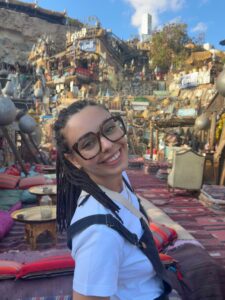 After graduating in International Relations with a specialization in Global Refugee Studies in Copenhagen I wanted to start building my experience in the field of humanitarian NGOs working on migration and first reception.
At the same time, I was drawn by the idea of moving to a warmer, sunnier country by the sea. While such transitions are often complex, the ESC volunteering programme made the process smooth, quick, and stress-free.
After three months in the program, I can confidently say that Malta and MOAS were the perfect match for me!
Here I work mostly in the fundraising team, drafting funding applications, but I also contribute to the communication team and to the organization of different activities at the refugee reception center in Hal Far.
I don’t know if this is exactly the experience I was expecting when I applied, but I am embracing it as an opportunity to grow and learn new lessons. During these past months I have already discovered new sides of me and learnt invaluable life lessons and skills that will enrich my experience.
I would definitely recommend such an experience to everyone: there are so many organizations and countries to choose from and it will allow you to live abroad while making friends and experiencing cultural diversity.
Silvia (Italy) – Communication Team
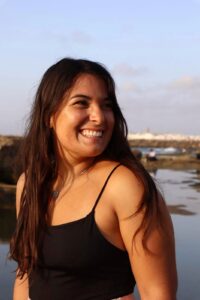 Learning, connecting, and flourishing are the three qualities at the core of my ESC experience with MOAS in Malta.
My dedication to social inclusion and the humanitarian field has always been a central part of my life. I graduated in Migration, Cooperation and Development at Ca’ Foscari University of Venice and volunteered with the Italian Red Cross for years.
However, this ESC journey was exactly what I needed, because it allowed me to develop key skills in communication and fundraising within a humanitarian organization, while also giving me the opportunity to manage social inclusion projects here in Malta, such as our English classes at the Hal Far Learning Centre with migrants and refugees.
The journey was not easy, since competition was high, but the rewards of persevering have far outweighed the challenges. Living in a wonderful country and working with MOAS has been insightful, stimulating, and deeply meaningful. The experience has been both demanding and precious.
As our coordinator often says, ESC means learning, discovering, and continuously improving ourselves. It offers the chance to connect with young volunteers from all over the world who are united by a shared commitment to a cause while also developing fundamental skills and understanding better who we want to be and what we want to do. I could not be happier with my decision to join MOAS.
Camilla (Italy) – Communication Team
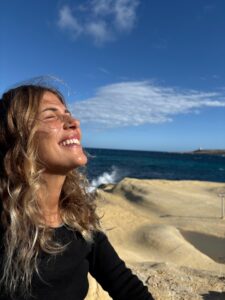 My journey with MOAS as an ESC volunteer started in July 2025, after spending a year in Argentina supporting people experiencing homelessness and addiction. That time challenged me and strengthened my commitment to social justice. When I finished, I knew I wanted to keep contributing to the humanitarian field and promoting human rights in a practical, meaningful way, finding an experience that could help me grow professionally without losing the values that guide me.
After years living in different parts of the world and often moving between internships and volunteer roles, I sometimes felt tired of the barriers that make it hard for young professionals to enter humanitarian and international cooperation. The need is huge, yet access can feel limited. Joining MOAS through the ESC programme has been a meaningful step forward: I’m learning every day, gaining practical skills and discovering strengths I didn’t realize I had.
Living in Malta has also supported my wellbeing: sunny days, the sea always nearby and a vibrant international community that brings constant opportunities for intercultural dialogue.
For me, MOAS is more than volunteering: it connects theory with real-life work, builds resilience and adaptability and helps people contribute to more equitable and inclusive communities.
Final Thoughts
The motto of the European Union is Unity in Diversity, and the European Solidarity Corps program perfectly embodies this. By immersing young professionals in diverse contexts, it fosters learning through action, reflection, and collaboration.
At MOAS’ headquarters in Malta, diversity is our strength: our team is very heterogeneous, composed of people from different countries and backgrounds and with different mindsets. Together, we join forces by sharing different views to find the best way to achieve our common goal: save the lives of those in need.
Your support can make a difference. Please consider donating to help us continue our missions and save lives. Visit www.moas.eu/donate to contribute. For more updates on our work, follow us on social media, sign up for our newsletter, or contact us at [email protected].
Disclaimer: “Funded by the European Union. Views and opinions expressed are however those of the author(s) only and do not necessarily reflect those of the European Union or the European Education and Culture Executive Agency (EACEA). Neither the European Union nor EACEA can be held responsible for them.”