Insights from the EUAA Reports on the Ongoing Civil Conflict in Sudan
On 15th April, Sudan will enter its third year of civil conflict, marked by violence, destruction, and human rights violations that have led to the worst displacement crisis in the world.
How did this happen up to this point? The latest 2 Country of Origin Information (COI) Reports[1] [2] by the European Union Agency for Asylum (EUAA) attempt to shed light.
How Did It Begin?
As the COI report on the Country Focus explains, the civil conflict is the result of the escalation of tensions between the 2 main security forces in the country, the Sudanese Armed Forces (SAF) and the Rapid Support Forces (RSF), which were formerly working together for the same President until his ousting in 2019.
The Conflict
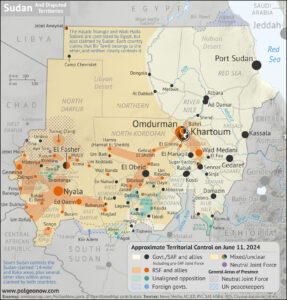
The COI report on the security situation in Sudan indicates that the conflict has spread to 13 or 14 of the country’s 18 states. Updated to November 30, 2024, the map illustrates the territorial control of SAF and RSF, their respective allies, and other actors. Additionally, it is important to note that in March 2025, SAF declared it had taken control of Khartoum, marking a pivotal point in the conflict. However, analysts caution that a swift resolution to the war is unlikely.
Peace Attempts
The same report interestingly notes that there have been several peace attempts by international actors who struggled to end the conflict. For example:
- In May 2023, the US and Saudi Arabia tried to co-facilitate negotiations;
- In March 2024, the UN Security Council adopted a resolution calling for an end to hostilities. At the same time, Libya and Türkiye facilitated a talk for a ceasefire;
- In August 2024, Switzerland, the US, and Saudi Arabia co-hosted ceasefire talks.
In October 2024, the UNHCR noted that there was no tangible progress in negotiations, as both SAF and RSF were still pursuing their own military victory.
Why is this a “Forgotten War”?
Indiscriminate attacks on civilians, the use of food as a weapon, sexual violence and exploitation, and the recruitment of civilians by both the RSF and SAF are currently occurring in Sudan, targeting those who, according to the Geneva Conventions of International Humanitarian Law, should be protected from hostilities.
In this frame, the EUAA states that 25 million people – which is almost equal to the entire population of Syria – are affected by food insecurity, and the casualties are estimated to be 150.000 as of May 2024. However, the Agency warns that, due to the countless challenges met to write the reports, it is hard to give definite numbers. Such challenges include the limited coverage of international media in the country combined with the harassment of local journalists and the disruption of governmental resources and data. And it is precisely due to the limited coverage by the media that the conflict has been called a “Forgotten War”.
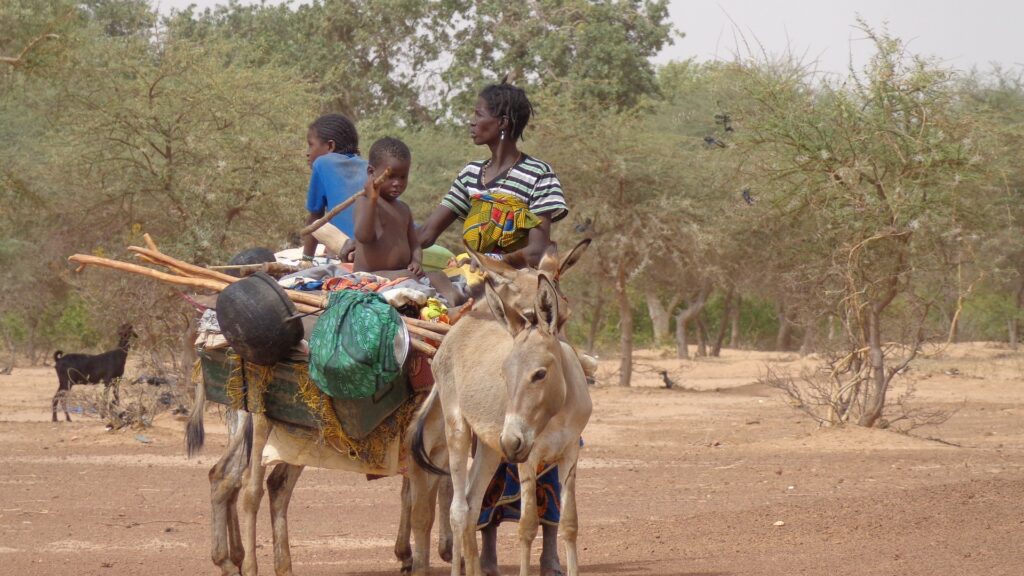
Due to this dramatic situation, “huge numbers of people have been forced to flee their homes for areas of relative safety, both within Sudan and in neighbouring countries […]. Over three million people are classified as refugees, and almost nine million are internally displaced. The total displaced population is greater than the entire population of Switzerland” (UN). This is why the crisis in Sudan is recognised to be the worst displacement crisis in the world
MOAS’ Mission of Hope in Sudan
Since the escalation of the violence that is devastating Sudan, MOAS started a project aimed at assisting the population severely affected by the conflict. As a result, 52 tonnes of nutritional aid have been shipped thanks to the invaluable partnership of Edesia Nutrition and Adra, and medical aid, which provided relief to 118.000 people, was delivered with the precious collaboration of UNHCR Sudan and Action Medeor.
In addition to this, another humanitarian mission to Sudan is planned this year, confirming MOAS’ commitment to supporting civilian populations unjustly affected by the conflict.
Final Thoughts
Despite several attempts to establish a ceasefire, the civil conflict in Sudan has reached its sad second anniversary, continuing to cause devastating humanitarian crises affecting first those who should be left out of the hostilities by the law.
With this article, MOAS wants to provide a general – non-exhaustive – overview of the situation, attempting to raise awareness about a forgotten conflict and encouraging further investigation. It is our responsibility to stay informed about what is unjust in this world and raise our voices to bring a change.
You can support our mission in Sudan with a donation: DONATE HERE
If you are interested in the work of MOAS and our partners, please follow us on social media, sign up for our newsletter and share our content. You can also reach out to us at any time via [email protected]. If you want to support our operations, please give what you can at www.moas.eu/donate.
Funded by the European Union. Views and opinions expressed are however those of the author(s) only and do not necessarily reflect those of the European Union or the European Education and Culture Executive Agency (EACEA). Neither the European Union nor EACEA can be held responsible for them.