
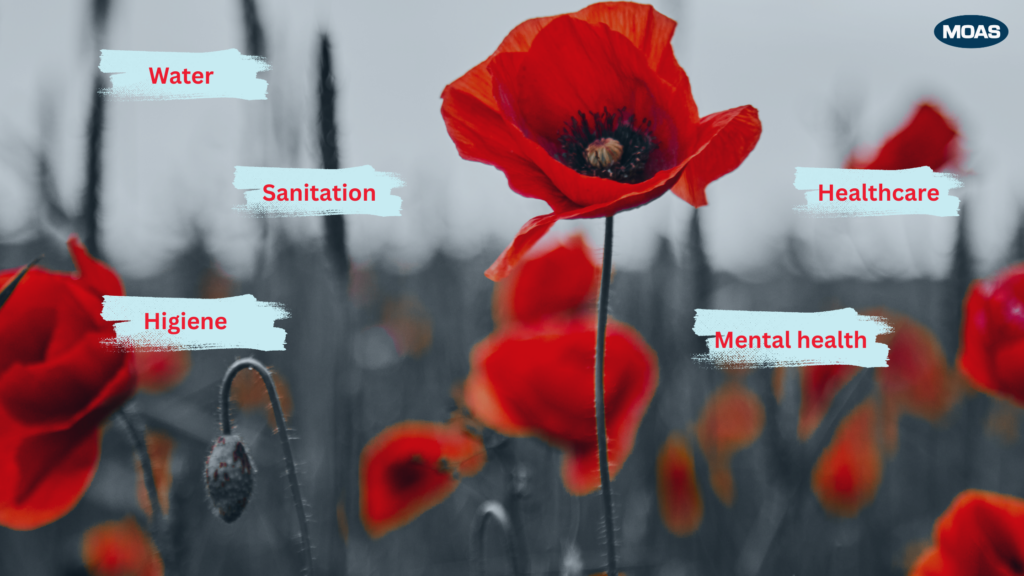
In every conflict zone, there is a frontline that rarely reaches the headlines: the daily fight of women trying to secure even the most basic healthcare. While the world watches battles unfold, women navigate a quieter but unrelenting war: one waged in collapsed hospitals, overcrowded shelters, unsafe roads and makeshift delivery rooms. They “bear a disproportionate and often overlooked burden of war,” not only because they are targeted through gender‑based violence, but because the systems that protect their health are the first to crumble. And yet, in the very places where services fail and institutions fall silent, women step forward. They become caregivers, organisers, protectors and first responders for one another. Their stories reveal not only the immense cost of conflict, but the extraordinary strength that rises when communities are pushed to the edge.
Surviving in a World Without Safety Nets
Across conflict‑affected regions, women’s everyday health needs don’t just persist, they become urgent emergencies. As health systems buckle under bombardment or neglect, women are suddenly cut off from contraception, maternity care, safe delivery services and protection from sexually transmitted infections. At the same time, the most basic building blocks of health, clean water and sanitation, begin to collapse. In fragile contexts, people are twice as likely to lack safely managed drinking water, forcing girls and women to walk longer, riskier routes to collect it, often through areas where harassment and violence are a constant threat. Even managing a menstrual cycle becomes a daily battle. Period products vanish from markets, and without clean water or private toilets, preventable infections like UTIs and bacterial vaginosis spread unchecked. The health systems meant to protect women are often the first casualties of war. Hospitals are damaged or abandoned, supply chains break down, and exhausted medical staff are stretched far beyond capacity. According to WHO, six in ten maternal deaths in 2023 occurred in conflict‑affected or fragile settings, a stark reminder that these are not isolated breakdowns but the predictable, deadly consequences of prolonged conflict. In many places, the collapse of healthcare has become a silent front line, claiming lives far from the battlefield.
A Silent Crisis: The Mental‑Health Burden No One Sees
The psychological toll of conflict is as relentless as it is invisible. Long before a woman reaches a clinic, if she can reach one at all, the mental strain of war has already seeped into every corner of her life. Prolonged fear, displacement, the loss of loved ones and the collapse of social networks create a constant state of hypervigilance that reshapes daily existence. More than 600 million women and girls now live in conflict‑affected areas, a staggering 50% increase since 2017 and nearly one in five people in humanitarian crises will develop long‑term mental health conditions. Yet only 2% receive the care they need.
For many women, the psychological pressure begins with the basics: keeping children calm during shelling, navigating unsafe roads to find food or water or trying to maintain dignity in overcrowded shelters where privacy disappears. The erosion of community, the neighbours, relatives, teachers and friends who once formed a protective web, leaves women isolated at the very moment they need support the most. Sexual and intimate partner violence, which rises sharply during conflict, adds another layer of trauma, often compounded by stigma and silence. And as women take on new roles, becoming heads of households, breadwinners and caregivers simultaneously, the emotional load grows heavier, even as access to mental‑health services shrinks.
The consequences are stark across different contexts. In Afghanistan, years of restrictive decrees have stripped women of autonomy and pushed them out of public life. UN Women reports that 68% of Afghan women describe their mental health as “bad” or “very bad,” a reflection of lives suddenly confined and futures abruptly closed off. Activists say many women “don’t even have the language to describe what they’re going through.”
In Ukraine, the pressures take a different shape but cut just as deeply. Gender‑based violence has risen 36%, unpaid care work has surged to 56 hours per week, and 42% of women are now at risk of depression. Among displaced people, most of them women, 53% report symptoms of depression, often without access to counselling or community support. One mother from Odessa recalled driving with her windows open during bombardment “to show we had children inside,” only breathing freely once she crossed the border.
First to Respond: The Quiet Architects of Survival
Despite everything stacked against them, women are far from passive in war, they are often the first to step forward when systems collapse. In countless conflicts‑affected communities, they become the quiet architects of survival. Women frequently take on roles that are nothing short of lifesaving: guiding neighbours to medical care, supporting safe deliveries, providing contraception, responding to sexual violence and offering the first threads of mental‑health support when formal services disappear. Their knowledge of their communities, who is vulnerable, who is missing, who needs help, becomes an essential part of the humanitarian response.
They rebuild what war tries to erase. They stitch social networks back together, challenge stigma and share information that helps others navigate broken health systems. And they do this while carrying their own losses: fleeing violence, grieving family members or suddenly becoming heads of households overnight. Yet their instinct is still to reach outward, to organise safe spaces, accompany other women to clinics or simply sit beside someone who cannot yet speak about what they’ve endured.
This resilience is not a slogan; it is a strategy for survival. In places where institutions falter, women’s leadership becomes the backbone of community endurance. Their solidarity is not supplementary to humanitarian action, it is often the only thing holding the fabric of daily life together.
The World Cannot Afford to Overlook the Frontline Women Are Holding
In every protracted crisis, women stand at the intersection of collapsing systems and rising needs. They endure the failures of healthcare, the erosion of safety and the weight of trauma that lingers long after the shelling stops. But their stories are not only accounts of suffering, they are testimonies of strength, ingenuity and solidarity. Women hold families together when institutions fall apart. They rebuild social networks when communities are scattered. They become the first responders when formal systems fail to show up.
Their leadership is not accidental; it is born from necessity and sustained by courage. And yet, too often, it remains overlooked in humanitarian planning and under‑resourced in global responses. Recognising women’s central role is not a matter of symbolism, it is a matter of effectiveness. When women have access to healthcare, protection and the tools to support one another, entire communities become more resilient.
As conflicts stretch on and new crises emerge, the world cannot afford to ignore the frontline women are holding. Their resilience is not infinite. Their strength should not be taken for granted. Investing in women’s health, safety and leadership is not only a humanitarian imperative, it is one of the most powerful ways to safeguard the future of communities living through war.
In the end, the story of women in long conflict is not just about survival. It is about defiance, dignity and the quiet, determined work of keeping hope alive when everything else is breaking.
Your support can make a difference. Please consider donating to help us continue our missions and save lives. Visit www.moas.eu/donate to contribute. For more updates on our work, follow us on social media, sign up for our newsletter, or contact us at [email protected].


Disclaimer: “Funded by the European Union. Views and opinions expressed are however those of the author(s) only and do not necessarily reflect those of the European Union or the European Education and Culture Executive Agency (EACEA). Neither the European Union nor EACEA can be held responsible for them.”