
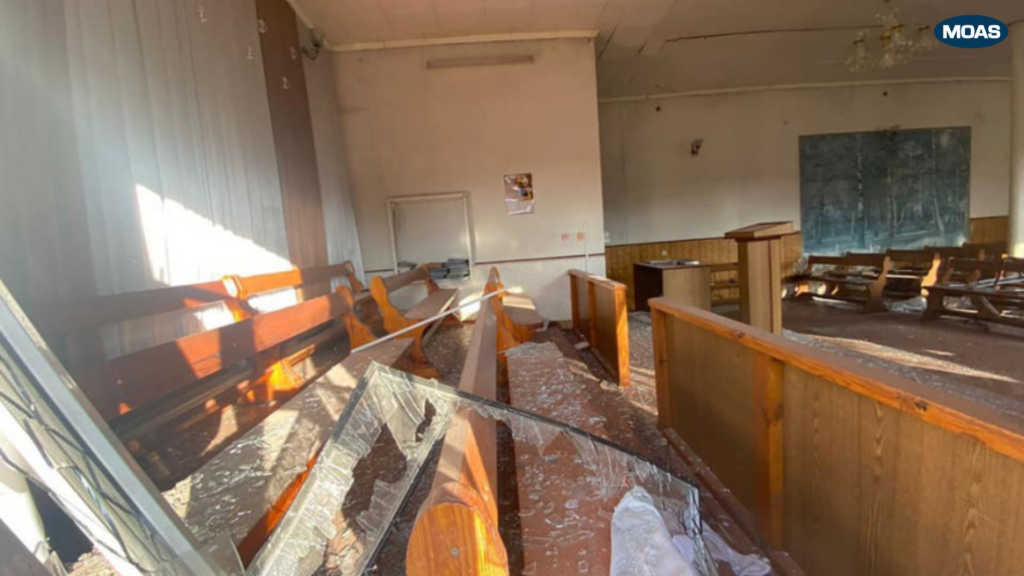
Childhood sets the direction in lives of all people. It sets our goals and desires, and it largely affects our happiness. Stable and happy childhood is not a privilege. It is a right. Yet, it is not so everywhere around the globe. For example, the war in Ukraine today is affecting millions of children.
Impact on education
The danger of rocket strikes and relocations make it hard and sometimes impossible for children to attend school. Third of Ukraine’s children—2,589,900—were displaced by February of this year, and hundreds of schools are destroyed or damaged. A third of Ukrainian children are unable to attend school full-time. It has huge impact on learning—average education loss was estimated to be two years in reading and one year in math, according to UNICEF data. Among the displaced children, 1,798,900 are refugees outside of the country, and they also experience disruption of education. The same material says that half of the children-refugees outside of Ukraine were not enrolled in national educational systems. It affects their opportunities to learn, develop, and communicate with peers. Difference in language of a host country for refugees also contributes to the friction in enrolling in school. Children inside Ukraine, whether displaced or local, are not entirely safe wherever they are, due to frequent long-range attacks that endanger their lives either directly or indirectly.
Mental health impact
Education is not the only role of school in children’s lives. It is also where children socialize and communicate with peers. It is where kids get over stress, build bonds with their peers, and live through those numerous emotional moments that every childhood should have. War, frequent air alarms, constant sheltering in basements, isolation at home, and strikes often deprive children of all of this, leaving them to deal on their own with the stress the hostile war-time environment imposes on them. Beyond that, school is a place where children can get support from trusted adults and specialists, such as school psychologists, which can help a lot when their family environment is not very stable and supportive.
And the psychological impact is real. UNICEF points at a survey of adolescents aged 15-19 highlighting that one in four of them are losing hope of a future in Ukraine. Many teenagers in Ukraine reported that they were feeling so sad or hopeless that they stopped doing their casual activities. Another survey by UNICEF showed that one in five children had lost a close friend or relative since the full-scale invasion, which further amplifies the problems that lack of socializing in school brings. During critical stages of life, such experiences have huge lingering effects on kids’ development and well-being. Communication and normal school life could help them to get over it in a familiar, supportive environment, but war takes it away from them.
Save the Children operates across almost all of Ukraine, providing different kinds of assistance for children and their families, including health and mental health support. They shared that kids across the regions where they operate show symptoms of anxiety, fear, moodiness, difficulty concentrating, and irritability. Some children have developed speech defects and uncontrollable twitching, while others have terrible nightmares and even scream in their sleep. Save the Children’s data shows that 43% of those children suffer from psychosocial distress. Also, they found that at least 5 children aged 8-16 in Kharkiv, a city very close to the front line, had developed grey hair, which their parents attribute to the stressful environment they live in. In the same material they share experiences of a family that had lived through occupation in a safe place under a table in their living room for several months and what impact it had on their son, who said that it was difficult for him to get back to normal after living through constant fear in isolation for several months. The organization’s case workers around Ukraine reported struggling with the emotional toll of the stories they hear from the kids they help.
Health in danger
Physical health of children is also in danger, and not only directly because of the missile or drone strikes, but because these strikes also damage health facilities and energy infrastructure. And energy infrastructure is especially important during winter, when the temperatures go sub-zero. Among all, young children are under the highest risk of hypothermia or respiratory diseases. Parents of newborns feel mentally and physically exhausted as well, which affects family life and happiness.
It is hard to estimate specific long-term effects of the war on children, but it is safe to say that constant stress, fear, night-stays in shelters without normal food and water supplies, and deprivation of normal school life will not disappear without any traces.
By February 2026, the UN verified 3,200 casualties among children due to long-range attacks or bombardments since the beginning of the full-scale invasion. It is a 10% increase in child casualties compared to the previous year, and it increased for the third year in a row. Apart from that, third of the displaced adolescents had to flee their homes twice, and the most common reason was safety.
Family separation
Millions of people have lost their jobs, incomes, and savings because of the war. These are often households, who must take care of their families and children: pay for rent, food, school, medical services, and so on. Some parents are forced to place their children in institutions for winters so that they can ensure that their kids will be fed and taken care of. Sometimes parents give their children to their relatives who live in safer locations or have an opportunity to take care of the kids. Also, children who are refugees outside of Ukraine are often separated from at least one of their parents, usually father. In many of these cases, they cannot meet again for years, as men mainly are not allowed to leave Ukraine. Also, financial aspect may prevent some parents from moving with their kids, so the kids are supposed to move alone and live on their own in the host countries.


Your support can make a difference. Please consider donating to help us continue our missions and save lives. Visit www.moas.eu/donate to contribute. For more updates on our work, follow us on social media, sign up for our newsletter, or contact us at [email protected].
Disclaimer: “Funded by the European Union. Views and opinions expressed are however those of the author(s) only and do not necessarily reflect those of the European Union or the European Education and Culture Executive Agency (EACEA). Neither the European Union nor EACEA can be held responsible for them.”