
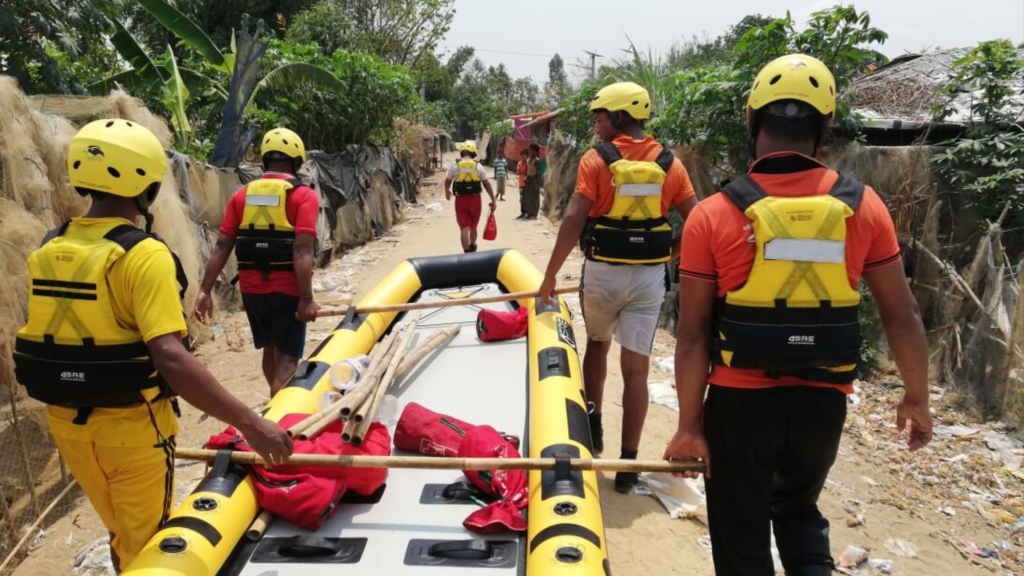
When a disaster strikes, the images that often reach us are those of destruction: flooded streets, damaged homes, displaced families and emergency responders working around the clock. Yet some of the most effective humanitarian work happens long before a crisis unfolds.
This approach is known as Disaster Risk Reduction (DRR): a combination of measures that help communities anticipate, prepare for and reduce the impact of hazards before they become disasters. Preparedness involves developing the knowledge, capacities, and systems that enable governments, organisations, and communities to anticipate, respond to, and recover from disasters effectively.
At its core, DRR is about protecting people. It is about ensuring that a storm warning reaches a village in time, that families know where to seek shelter, that communities understand the risks they face and that humanitarian actors can respond quickly when emergencies occur.
Why Preparedness Matters More Than Ever
The need for preparedness is becoming increasingly urgent. The number of disasters and crises continues to rise, while humanitarian emergencies are becoming more complex, prolonged and unpredictable. Indeed, humanitarian organisations are having to adapt continuously to respond effectively to overlapping and increasingly complex crises.
But disaster risk reduction is not simply about reacting more efficiently. It is about shifting from a reactive approach to a preventive one. Preparedness strengthens early warning systems, improves public awareness and enhances response capacities, helping countries identify and address risks before they escalate into disasters.
For communities living in fragile environments, this distinction can be life-changing. Every evacuation plan developed, every training exercise conducted and every warning system installed can mean fewer lives lost and faster recovery when disaster strikes.
Building Resilience Starts With Communities
One of the most important lessons emerging from disaster risk reduction efforts worldwide is that resilience cannot be imposed from the outside. It must be built together with communities. Communities should be active leaders of their own preparedness, rather than passive recipients of information or assistance. Local volunteers, community leaders and residents often possess invaluable knowledge about local risks and vulnerabilities, helping to ensure that preparedness measures are realistic, trusted and effective.
At MOAS, this principle has guided our work in Bangladesh. Through years of engagement in the Rohingya refugee camps of Cox’s Bazar, our Disaster Risk Reduction initiatives focused on preparedness and risk awareness, strengthening emergency response capacity and building community skills through training and collaboration. These efforts sought not only to respond to crises but also to help communities become better equipped to face future challenges.
As explored through MOAS’ research project on disaster risk reduction in Bangladesh, resilience is not simply about surviving a crisis. It is about enabling communities to recover stronger, learn from experience and reduce vulnerabilities over time.
The Human Impact of Early Warning Systems
One of the clearest examples of preparedness in action is the early warning system.
An effective early warning system provides timely and relevant information that allows people to take action before a hazard becomes a disaster. Such systems save lives, protect livelihoods and support long-term sustainability.
However, technology alone is not enough. Researchers emphasise that warnings must be understood, trusted and communicated effectively if people are to act on them. The human element remains critical. Timely information only becomes life-saving when communities know how to interpret it and have the means to respond. This is why awareness campaigns, drills, community engagement and local leadership are just as important as the warning systems themselves.
The results can be remarkable. Around the world, investments in preparedness, early warning systems, community training and risk awareness have contributed to significant reductions in disaster-related mortality and losses.
The Role of Humanitarian Organisations
Humanitarian organisations have long been associated with emergency response. Increasingly, however, their role extends beyond responding to disasters toward helping prevent risk and strengthen resilience.
NGOs have become key actors within the global disaster risk reduction ecosystem, contributing to both humanitarian action and long-term resilience-building efforts.
At MOAS, we have seen firsthand that preparedness can be just as important as response. Whether supporting risk reduction initiatives in Bangladesh, sharing lessons learned through research, or working with local partners to strengthen community capacities, our goal remains the same: protecting people before, during, and after crises.
Preparedness is not a separate phase from humanitarian action. It is a humanitarian action.
A Shared Responsibility
Disaster risk reduction is often discussed in technical terms, yet its purpose is profoundly human. Behind every preparedness plan is a family seeking safety. Behind every early warning system is a community hoping to avoid loss. Behind every resilience programme is the belief that people deserve not only to survive crises but to face the future with dignity and confidence.
Building resilience is a shared responsibility. Governments, humanitarian organisations, local authorities, researchers, communities and individuals all have a role to play. Because while disasters may not always be preventable, their impacts can often be reduced. And when preparedness is prioritised, lives are protected long before an emergency begins.
Your support can make a difference. Please consider donating to help us continue our missions and save lives. Visit www.moas.eu/donate to contribute. For more updates on our work, follow us on social media, sign up for our newsletter, or contact us at [email protected].


Disclaimer: “Funded by the European Union. Views and opinions expressed are however those of the author(s) only and do not necessarily reflect those of the European Union or the European Education and Culture Executive Agency (EACEA). Neither the European Union nor EACEA can be held responsible for them.”