
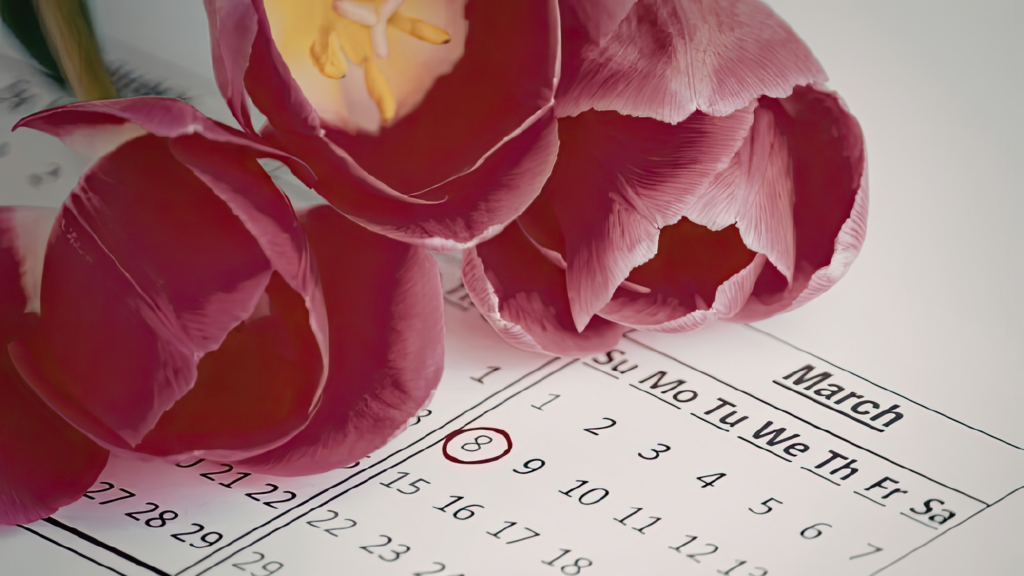
Every year on March 8th, the calendar marks a single date: International Women’s Day. Across continents and cultures, this day resonates as a moment to reflect on women’s achievements and also to confront the deep inequalities that persist in daily life. Yet what it feels like, whether celebration, solidarity, reflection, or struggle, varies widely depending on where you live, your social circumstances, and the resources available to you. At its heart, International Women’s Day was never intended as a purely festive occasion. Today, it continues to serve as both a celebration of women’s contributions and a reminder of ongoing struggles for equality.
A Day With Deep Historical Roots
The modern observance of March 8th grew mostly in Europe and North America out of early 20th-century movements for women’s rights, including the right to vote, to labor protections, and to full citizenship. Over time, recognition by global institutions helped solidify the date’s significance. In 1977, the United Nations formally encouraged member nations to observe International Women’s Day as a day of global awareness and action toward gender equality.
Today, annual themes set by global actors like the United Nations revolve around advancing women’s empowerment and reducing gender gaps as part of the broader Sustainable Development Goals, especially Goal 5: Gender Equality.
A Celebration or A Call to Address Inequality?
For many women around the world, March 8th is a day to be recognized and appreciated. In several countries of Eastern Europe and Asia, the day is commonly treated as a moment of social appreciation: friends, family members, and colleagues might exchange flowers or small tokens. In some places like China, women may receive a half-day off work as a gesture of respect. These rituals, while not universal, reflect something deeply human: the desire to honor women’s contributions to families, communities, workplaces, and public life. For many, even small acts of recognition carry emotional weight and create spaces for joy and connection.
But the 8th of March is also a stark reminder of systemic injustice. Data shows that despite progress in many areas, gender inequality remains pervasive around the world:
- An estimated two billion women and girls have no access to social protection such as unemployment benefits, pensions, or healthcare, a gap that disproportionately exposes them to poverty and economic instability. Women and girls in these contexts often shoulder disproportionate unpaid care work, limiting opportunities for paid employment and economic independence.
- Globally, women’s participation in the labour force remains lower than men’s, and they continue to face barriers in accessing decent work.
- Gender violence remains a global humanitarian crisis: one in three women worldwide experiences physical or sexual violence by an intimate partner or non-partner in her lifetime, a pattern that holds across regions and income levels.
These are not abstract statistics. They reflect lived experiences that affect women’s health, dignity, economic stability, and access to opportunity and are the reason why in some countries March 8th is less about symbolic acknowledgment and more about taking to the streets to confront ongoing social injustices. International Women’s Day has become a rallying point for collective protest, where people gather not just to commemorate but to demand systemic change.
In much of Latin America, March 8th is marked by powerful street demonstrations where women mobilize to demand an end to gender-based violence, greater economic equality, and justice for victims of femicide, making International Women’s Day a deeply visible and socially charged moment across the region.
In Argentina, for example, International Women’s Day has long been intertwined with public mobilization against gender-based violence and economic inequality. Demonstrators have filled plazas and avenues from Buenos Aires to provincial capitals under the slogan “Ni una menos” (Not One Less), a movement that began in 2015 to highlight femicides and violence against women. Marches on March 8th continue to draw large crowds urging better protections, justice for victims, and an end to impunity for gender-based crimes.
In Mexico, massive marches on March 8th are a vivid expression of public anger over persistent violence against women and femicide. Reports from 2025 indicate that over 200 000 people gathered in Mexico City’s central districts to demand government action against gender violence.
Some southern and Central European countries, notably Spain and Poland, use March 8th as a platform for activism and protest as well. Large-scale marches, feminist strikes, and public demonstrations call attention to gender-based violence, unequal pay, and reproductive rights.
Even in countries where celebration and recognition coexist with activism, such as France, Germany, Belgium, and Portugal, the day reflects a dual focus: citizens may enjoy cultural programming or small gestures of appreciation while participating in rallies and advocacy campaigns demanding social change.
In Northern and Western Europe, including Sweden, Finland, Denmark, the Netherlands, and Luxembourg, the day is typically institutional and awareness-oriented, marked by conferences, panel discussions, and public campaigns that highlight workplace equality, political representation, and social inclusion. These events tend to focus on structural change, promoting gender equity in policy and professional life rather than personal celebration.
Across Africa, March 8th is widely recognised as a day to celebrate women’s contributions and promote gender equality, with governments, regional organisations and civil society groups hosting events that blend cultural recognition, education and advocacy. Local celebrations also include community gatherings, artistic exhibitions, lectures and public awareness campaigns focused on women’s rights, economic inclusion, health and education, while aligning with broader development agendas on gender equity.
Across these varied contexts, protests and advocacy events on March 8th unite people around shared humanitarian concerns: safety, justice, dignity, and equal access to opportunity. They remind the world that equality remains unfinished business, and that collective action continues to be a driving force for social change.
Why the Realities Differ
The fact that March 8th can be both festive and protest-oriented, warm and urgent, reflects the diverse social fabric of our world. Differences in how the day is experienced are shaped by:
- Economic structures that influence access to education, healthcare, and social safety nets;
- Cultural traditions that shape public attitudes toward gender roles;
- The presence or absence of community-driven advocacy spaces where women can organise and speak freely.
None of these factors operate in isolation, but their interconnection makes clear why a single date on the calendar born with a precise aim can feel so different in different countries..
Looking Beyond March 8th
It is important to remember that the struggles reflected on International Women’s Day are not confined to a single day. As humanitarian agencies and gender equality advocates emphasize, progress on women’s rights must be sustained year-round, driven by inclusive policies and community solidarity.
The aim is not simply to celebrate progress but to ensure that every woman and girl has access to safety, well-being, and the opportunity to thrive, whether that means a secure income, protection from violence, or equitable access to healthcare and education.
When we step back from the flowers and the hashtags, International Women’s Day reminds us of a simple humanitarian truth: Women’s well-being matters to the well-being of societies worldwide. The year’s challenges, whether economic inequality, unpaid care burdens, or the risk of violence, all point to the fact that full equality remains unfinished business.
MOAS carries this reflection beyond March 8 by working on the frontlines of humanitarian response, ensuring that women and girls facing displacement, crisis, and vulnerability are protected and supported every day of the year.
March 8th can be a moment of celebration, but it can also be a moment of deep reflection, about how far we have come and how much work still lies ahead. Acknowledging both truths, joy and struggle, makes the day meaningful for us all.
Your support can make a difference. Please consider donating to help us continue our missions and save lives. Visit www.moas.eu/donate to contribute. For more updates on our work, follow us on social media, sign up for our newsletter, or contact us at [email protected].
Disclaimer: “Funded by the European Union. Views and opinions expressed are however those of the author(s) only and do not necessarily reflect those of the European Union or the European Education and Culture Executive Agency (EACEA). Neither the European Union nor EACEA can be held responsible for them.”