
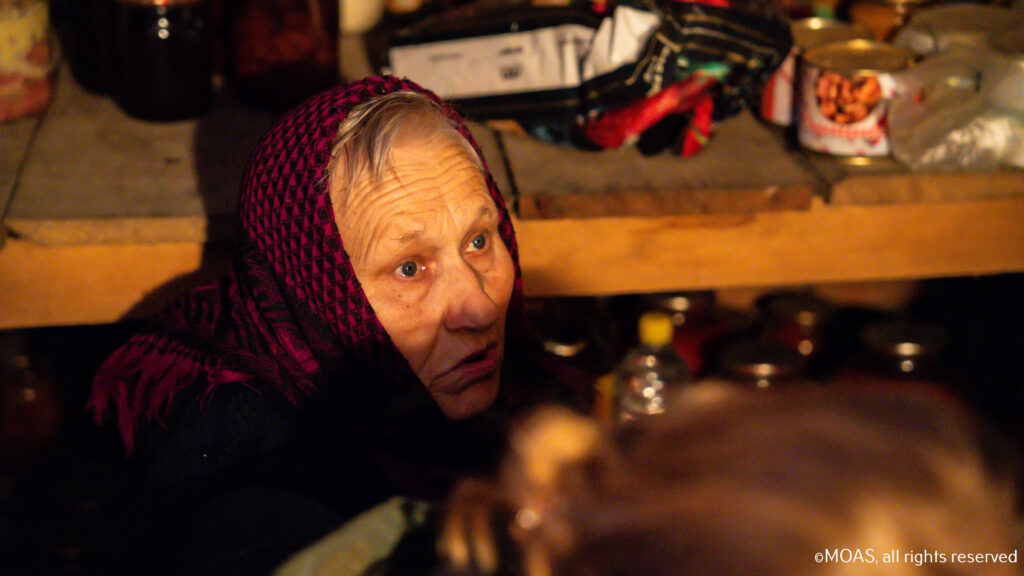
As the United Nations International Day of Older Persons took place last week, we want to highlight the older people in Ukraine who are facing war while also navigating the challenges of ageing. Despite the disruption, danger, and uncertainty, many continue to contribute to their communities, support others, and show resilience in daily life. Here are some of their stories as reported in Foreign Ukraine:
Hanna’s camouflage nets
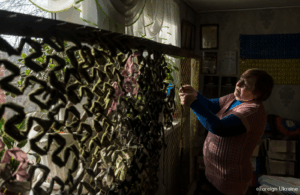
Hanna Sergienko, 65, lives in a small village south of Kyiv. Her home has become a hub for volunteers weaving camouflage nets for soldiers on the front line. Hanna remembers the early days: “I was retired, but I was still working and didn’t know how to help. I couldn’t go to the front. Then I saw people on TV weaving camouflage nets. So I found like-minded people, quit my job, and on December 9, 2014, we started weaving.”
The nets change with the seasons, reflecting the colours of nature: grey and black in winter, green in spring, and yellow and red in autumn. “Every time we weave winter camouflage nets, I think, ‘I hope this is the last time we do them.’ Every season, we hope that we will never have to do them again. But unfortunately, after all these years, we keep coming back.”
Hanna’s story demonstrates how older people continue to make meaningful contributions, passing on skills and traditions to younger volunteers while supporting Ukraine’s defence.
Living through war, again
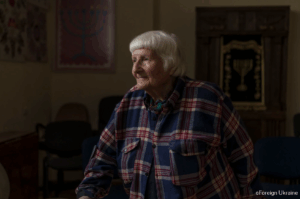
Some older Ukrainians carry memories of past wars, which shape their perspective on the present. Valentina Romanova, 93, a Holocaust survivor, remembers losing her mother at Babyn Yar and surviving bombings as a child. When the full-scale Russian invasion started in 2022, she and her fellow care home residents were offered evacuation. Many resisted.
“I was born in Kyiv and have lived here all my life. We have already survived war. We are all Kyiv residents; we will cope. No water? We know where the well is. No food? We are not afraid of starving,” Valentina recalls.
Her story demonstrates that resilience stems from experience, community, and a determination to persevere despite danger.
Volunteering and human connection
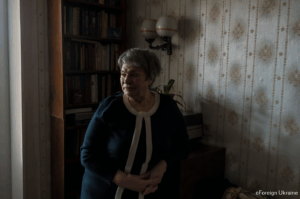
For many, staying involved in community life provides both purpose and support in difficult times. Also in Kyiv, 74-year-old Lidia Terepnyova volunteers at the Jewish Community Centre “Halom.” When the full-scale invasion began, she coordinated the distribution of humanitarian aid to elderly clients, even as her son emigrated to Israel.
“All my friends are here. I talk to them every day. I just couldn’t leave! The fact that I’m not alone helps me live. We help each other. If there’s joy, we can share it. If there’s sadness, it’s easier to go through it all together,” she says.
For Lidia, remaining connected with others is essential. Older volunteers like her offer practical support whilst also maintaining community spirit.
Creativity as resistance
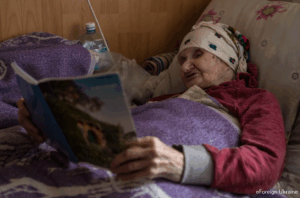
Some older Ukrainians channel their experiences and resilience into creative expression, giving voice to their generation. Eighty-seven-year-old poet Nadezhda Krasnozhon continues to write and reflect through her poetry, capturing both personal and collective experiences of war.
She was active in Ukraine’s first pro-independence movements and has seen her country through multiple upheavals. “I write when I have something to say,” she explains. Even now, she is working on a new collection about the current war, showing that age does not diminish one’s voice or ability to contribute.
Older Persons on the frontline
MOAS has also witnessed firsthand how older Ukrainians are providing hope and support. “Grandmother Valentina” (seen in cover image), an elderly woman, has been providing housing to our MOAS Team near the frontline, from where we evacuate patients in critical conditions.
We also witness their resilience in our evacuations. One example is an 84-year-old man injured by a drone while repairing a war-damaged bridge in his village. We evacuated him to a hospital, and he has since recovered from his injuries.
These stories highlight both the vulnerability and courage of older people who continue to face risk while helping others.
Final thoughts
These stories serve as a reminder to recognise Ukraine’s older generation not only as survivors of war but also as active members of their communities. Their experiences show us that growing old in war-torn Ukraine is not solely about survival. It involves maintaining connections, supporting others, and living with dignity and purpose.
In the words of Lidia Terepnyova, “I just couldn’t leave!” This simple statement reflects the determination, commitment, and human spirit of Ukraine’s elderly, who continue to live, contribute, and endure despite the ongoing conflict.
Your support can make a difference. Please consider donating to help us continue our missions and save lives. Visit www.moas.eu/donate to contribute. For more updates on our work, follow us on social media, sign up for our newsletter, or contact us at [email protected].