
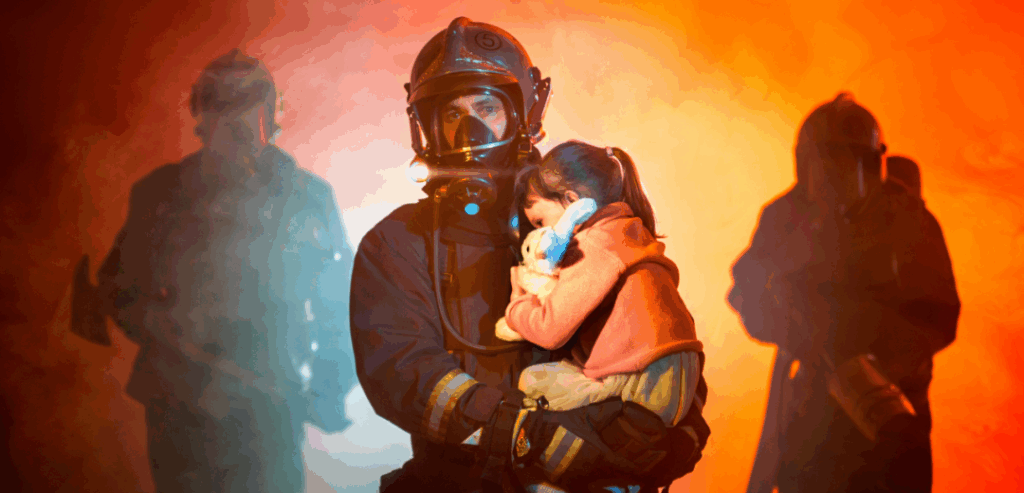
Wildfires in Greece, floods in Pakistan, drought in the Horn of Africa. Climate-related disasters are now familiar headlines. But behind every event is a growing number of people in need of help. Climate change is not a future concern. It is reshaping humanitarian work today by driving displacement, food insecurity, and growing the scale of emergencies.
This article examines the impact of climate change on the humanitarian sector, the adaptation strategies employed by organisations, and the necessary political action to address the scale of the crisis.
Climate Change Is Driving Humanitarian Crises Now
Climate change acts as a crisis multiplier. It drives more frequent and severe weather events, like floods, droughts, and wildfires, that destroy homes, disrupt livelihoods, and force people to leave their communities. In 2023 alone, 363 weather-related disasters affected at least 93.1 million people and caused thousands of deaths. There were 26.4 million internal displacements, with over three-quarters triggered by weather events. Disasters now account for more than 60% of newly recorded internal displacements each year.
That same year, a record 362 million people needed humanitarian assistance. This represents a 32% increase from 2022, underscoring the scale of the need, which is exacerbated by climate-related crises.
If current trends persist, the world could face 560 major disaster events annually by 2030, roughly 1.5 each day. Over the past two decades, UN appeal needs for extreme weather-related emergencies have increased by 800%.
Impact on the Humanitarian Sector
Climate change is not only increasing the scale of humanitarian needs, it is also making it harder to meet them. More frequent and severe disasters disrupt supply chains, damage infrastructure, and limit access to affected communities. Washed-out roads, extreme heat, and flooded regions can delay or block aid delivery entirely.
Crises are also becoming more complex and overlapping. Humanitarian teams are often responding to simultaneous emergencies, such as drought, displacement, disease, and food insecurity, while also supporting climate migrants who may not fall under existing legal protections.
All this puts the sector under immense pressure.
The Limits of the Humanitarian System
But the sector is not equipped to handle the changing and growing needs that follow from the climate crisis.
Funding Shortfalls
In 2025, global humanitarian funding needs reached $56.9 billion, according to UN OCHA’s Global Humanitarian Overview. However, by mid-year, only 21% ($12.1 billion) of the required funding had been received. This makes 2025 one of the worst years on record for funding shortfalls, as humanitarian needs continue to rise.
The humanitarian system is already stretched thin. Emergency aid budgets cannot fill the growing gap created by more frequent and severe climate impacts, let alone fund long-term adaptation and resilience.
At the same time, humanitarian organisations are increasingly expected to respond to climate-driven crises, yet they often lack the tools, funding, or mandate to do so. As highlighted during COP28, the sector faces a growing contradiction: the demand for greater involvement with climate risks is increasing, but it remains structurally unprepared for the long-term, systemic efforts required to address those risks effectively.
Short-Term Funding vs Long-Term Needs
Building climate resilience takes time. Many practical adaptation projects, such as infrastructure improvements or long-term preparedness training, require stable, multi-year support. But humanitarian funding is typically short-term and reactive, geared toward immediate relief. This mismatch makes it difficult to plan ahead and reduce future needs.
Is It Their Responsibility?
Are humanitarian organisations even responsible for doing this work? A key question is whether humanitarian aid should count as loss and damage funding. Loss and damage funding refers to money specifically allocated to compensate vulnerable countries for the harms caused by climate change. Counting regular humanitarian aid as loss and damage is controversial, as it shifts climate compensation responsibilities from wealthier polluting countries to overstretched aid budgets.
Many argue that high-emissions countries, rather than humanitarian agencies, should be responsible for compensating communities that are hit hardest by climate change.
Treating humanitarian assistance as a substitute for climate finance risks obscuring the fundamental responsibility of governments and slowing the shift toward structural solutions.
How Humanitarian Organisations Are Responding
The humanitarian sector is shifting to meet the growing challenges:
Shifting from Reaction to Anticipation
Humanitarian actors are preparing for more frequent and severe disasters. Organisations are updating response plans, investing in disaster risk reduction, and pre-positioning supplies in high-risk areas. These measures are essential to keep pace with the increasing frequency and severity of disasters.
MOAS has incorporated anticipatory strategies into our operations. For example, in Bangladesh, our Flood and Water Safety, as well as our Fire Safety Training programmes, prepare vulnerable communities to respond to the increasingly severe seasonal monsoon risks and fire dangers that are exacerbated by climate change.
There is a growing push for anticipatory action, which involves intervening before a disaster strikes. This includes early warning systems, resilience training, financial planning, and community preparedness. These approaches reduce harm and save resources, but often receive less attention and funding than traditional emergency response. Their quiet success makes them less visible to donors.
Advocating for Political Action
Preventing catastrophic climate change is not the responsibility of humanitarian agencies. That task lies with policymakers. Aid organisations can, however, advocate for change and lead by example by reducing waste, or greening operations. But they cannot drive global emissions reductions alone.
Curbing global warming depends on government action: implementing laws that reduce greenhouse gas emissions, phasing out fossil fuels, investing in clean energy, etc..
At MOAS, advocacy is a central part of our climate-aware humanitarian approach. Our awareness campaigns highlight the links between displacement, conflict, and climate change, urging political actors to address root causes.
Final thoughts
Humanitarian organisations must clearly define what they can and cannot do in response to the climate crisis. Their strength lies in responding to urgent needs, integrating climate risk into programs, and pushing for system-wide change. But they cannot solve climate change alone.
Governments and the countries most responsible for emissions must take the lead. Without serious political action, the humanitarian system will continue to be overwhelmed by the human cost of climate inaction.
Your support can make a difference. Please consider donating to help us continue our missions and save lives. Visit www.moas.eu/donate to contribute. For more updates on our work, follow us on social media, sign up for our newsletter, or contact us at [email protected].