One year ago, we published a blog about the new year’s humanitarian trends, reporting that 300 million people were estimated to require assistance and protection in 2024 and that the UN and other organisations would have appealed for $46.4 billion to help 180.5 million people across 72 countries.
Today, one year later, we sadly warn of an even more serious and urgent situation that esteems 305.1 million people in need in 2025 (corresponding to the combined population of France + UK + Germany). In this context, humanitarians are seeking $47 billion in 2025 to help 190 million people across 72 countries.
Overview of the 2025 Humanitarian Trends
In Europe, the war in Ukraine is undoubtedly the most urgent humanitarian crisis. While 2025 would represent a turning point of the conflict (hoped to be the achievement of a rightful peace), UNHCR estimates that 36% of the Ukrainian population will need humanitarian assistance.
- In the Horn of Africa and Middle East, geopolitical tensions combined with the devastating consequences of climate change are threatening the lives of millions of people in areas including Sudan – which tops the 2025 Emergency Watchlist drawn up by the International Rescue Committee; Yemen – one of the world’s largest humanitarian crises, which is entering its 10th year of civil war; Somalia – where the humanitarian situation has slightly improved in 2024, and we must keep on working on it; Syria – one of the largest displacement crises in the world.
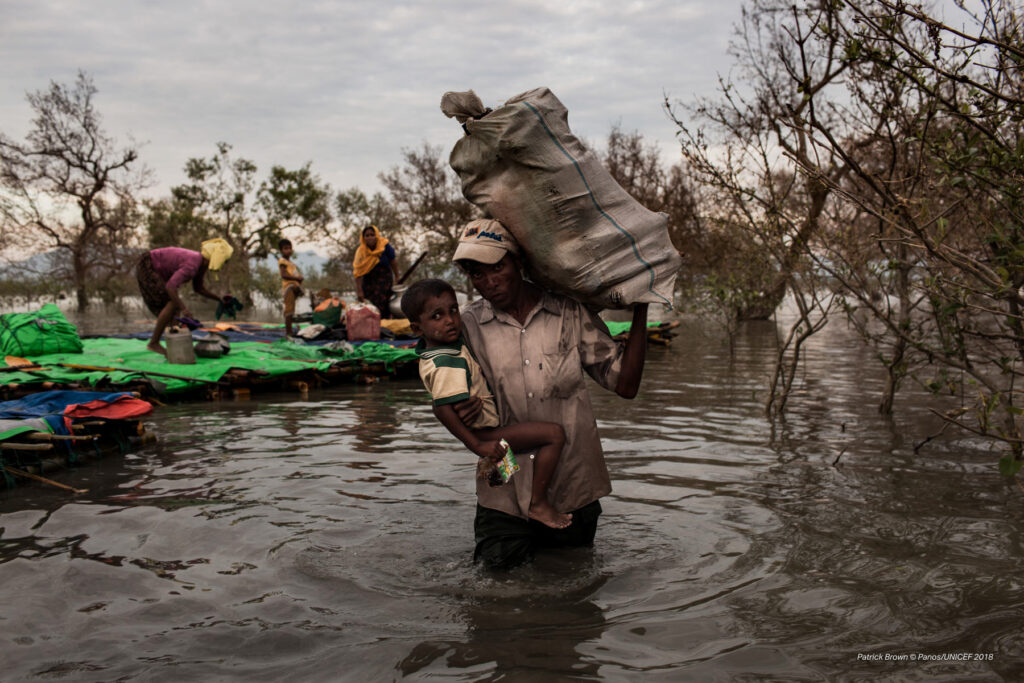
- In South Asia, climate change-related natural disasters, combined with the conflict in Myanmar, are endangering millions in Bangladesh and Myanmar, of whom 3 million are currently displaced due to the civil war.
- In Latin America, an estimated 14.3 million individuals will require humanitarian assistance due to mixed migration and armed conflict. In this context, it is necessary to mention Haiti – ravaged by gang violence – due to the intensifying crises of forced displacement, worsening food insecurity and rising malnutrition
This short paragraph does not provide a comprehensive and complete view of contemporary reality’s humanitarian crises. Unfortunately, the space on this page would not be enough. We have decided to focus on the most urgent situations, including those we deal with at MOAS, to encourage you to investigate the subject further.
We acknowledge that the figures presented are staggering, yet it’s essential to remember that each number represents a person. Visualize a mother, a child, or a family enduring the daily struggles of conflict, grappling with displacement, desperation, and a lack of access to food and healthcare. Their only hope to survive is through the aid they receive.
MOAS Humanitarian Efforts
As of 2024, MOAS is proud to have successfully carried out humanitarian missions across multiple regions. Our efforts have focused on providing life-saving aid, strengthening disaster preparedness, and supporting vulnerable communities affected by conflict and displacement.
In 2025, MOAS remains steadfast in its commitment to addressing humanitarian crises through targeted and impactful actions, ensuring that aid reaches those who need it most. While global uncertainties persist, including the various potential development paths the new U.S. administration may pursue, MOAS carefully evaluates the opportunities and challenges these changes may bring.
Despite these uncertainties, our priorities are clear. Given the ongoing crisis in Ukraine, we are determined to continue delivering life-saving help to those in need, providing critical support on the front lines, and saving lives. Additionally, we plan to maintain our essential aid deliveries to Somalia, Sudan, and Yemen, upholding our commitment to these vulnerable regions.
Looking ahead, MOAS also aims to develop new humanitarian programs that align with our mission and expand our existing projects, further enhancing our capacity to respond to global humanitarian challenges.
Final Thoughts
As we look towards future humanitarian trends, MOAS emphasizes the critical need to adapt and respond to the evolving needs of vulnerable communities worldwide. Despite the uncertainties shaping the global landscape, our mission remains clear: to provide life-saving assistance and support to those in crisis. In light of the increasing frequency and intensity of conflicts, climate disasters, and infectious disease outbreaks, MOAS believes that international cooperation, diplomacy, strategic partnerships, and unwavering commitment are key to expanding our global impact and effectively addressing the growing humanitarian challenges.
Your support can make a difference. Please consider donating to help us continue our missions and save lives. Visit www.moas.eu/donate to contribute. For more updates on our work, follow us on social media, sign up for our newsletter, or contact us at [email protected].

Funded by the European Union. Views and opinions expressed are however those of the author(s) only and do not necessarily reflect those of the European Union or the European Education and Culture Executive Agency (EACEA). Neither the European Union nor EACEA can be held responsible for them.