
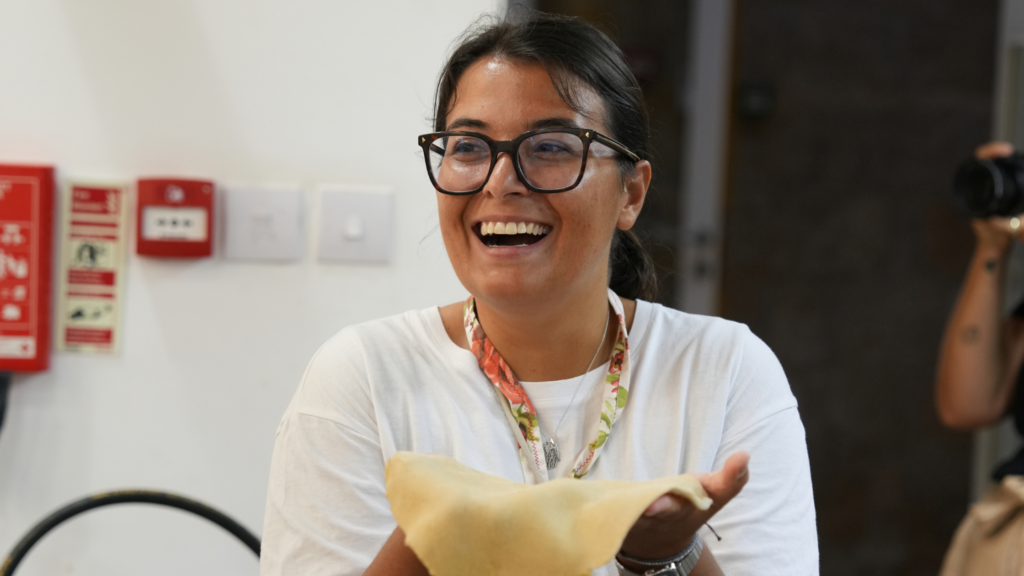
Young people are not waiting for permission to shape the future of humanitarian work, they are already doing it. Across the world, this generation is stepping confidently into new spaces, embracing emerging technologies and redefining what leadership looks like in times of crisis. They bring a mindset rooted in collaboration, justice and possibility, challenging long‑standing assumptions about who can contribute and how. Today’s young humanitarians are not simply entering the sector; they are transforming it, reshaping humanitarian action with fresh skills, bold ideas and a deep commitment to building a more compassionate future.
Young Humanitarians Responding to Global Shifts With Innovative Approaches
Young people today are coming of age in a world defined by rapid and often unsettling change. Technological advances are reshaping how societies function, living costs and labour markets are shifting, trust in institutions is weakening and environmental risks are intensifying. Yet these pressures are not pushing youth away from engagement, they are drawing them in. Young people are using this moment to actively reimagine systems and solutions for the future, building new forms of community grounded in learning, service and collective action. Rather than being overwhelmed by global uncertainty, they are responding with creativity, adaptability and a determination to shape what comes next.
As digital natives, they view technology not as an optional tool but as an essential part of how crises are understood and addressed. Their fluency with digital platforms, data and emerging technologies allows them to navigate complex environments with confidence and creativity. Across training programmes and youth‑focused initiatives worldwide, young people are gaining skills in areas such as digital literacy, entrepreneurship and artificial intelligence, competencies that are rapidly becoming central to modern humanitarian response. These efforts are not only preparing youth for future roles; they are strengthening institutions, expanding access to knowledge and reshaping how communities respond to challenges. In many ways, this generation is building the foundations of a more adaptive and technologically empowered humanitarian sector.
Globally, the digital gap facing young people remains striking. UNICEF estimates that 65% of teenagers lack the digital skills required for nearly 90% of today’s jobs, even as 86% of employers expect technologies like AI and advanced information‑processing to reshape their industries by 2030. This mismatch is driving a rapid expansion of youth‑focused digital training initiatives, aimed at equipping the next generation with the competencies needed to navigate an increasingly technological world. These programmes are not only building technical capacity; they are preparing young people to step into roles as innovators, leaders and problem‑solvers across humanitarian and development sectors. In a landscape where digital fluency is becoming essential, youth are positioning themselves at the forefront of change.
New Competencies, New Perspectives, New Priorities
A rising generation is reshaping humanitarian work with new competencies and a fundamentally different perspective.
Digital fluency as a humanitarian tool
Young volunteers are increasingly turning to AI as a practical tool for humanitarian engagement, using it to analyse data more efficiently, organise projects and amplify the reach of social initiatives. According to UNV, more than 70% of secondary students now use AI in their academic work, a sign of how deeply these technologies are embedded in daily learning. At the same time, online volunteering has grown by over 60% in just one year, underscoring a shift in how young people participate in global causes. Humanitarian impact no longer depends on physical presence; it can be driven from anywhere, by anyone with the skills and motivation to contribute.
Activism meets humanitarianism
Across the world, a growing number of youth activists are turning to digital tools to advance social and humanitarian causes. They use technology to raise awareness, defend rights, mobilise communities and push for change in ways that were not possible a decade ago. Platforms that once served mainly for conversation have become spaces for organising, educating, and advocating. The Young Activists Summit has highlighted how digital human rights defenders are transforming online engagement into real‑world impact, showing that modern humanitarian action is increasingly intertwined with digital advocacy and collective mobilisation. For many in this generation, technology is not just a communication tool; it is a catalyst for participation and protection.
A demand for accountability and inclusion
Youth today are increasingly vocal about the need for systems that safeguard their rights, offer meaningful participation and link skills development to real opportunities and social protection. Their expectations reflect a broader call for structures that recognise their role in shaping the future. Young people thrive when national strategies place them at the centre, when legal frameworks uphold their rights and when training programmes align with actual labour market demands. In other words, they are asking not just to be included, but to be equipped and to be taken seriously as partners in building more resilient and equitable societies.
Humanitarianism as a shared, global responsibility
A rising generation is also broadening the very definition of humanitarian work. For many, contributing to global causes is no longer tied to geography or formal roles; it can happen remotely, locally or through digital platforms that make participation easier than ever. This shift in mindset is expanding the reach of the sector, making humanitarian action more inclusive, more accessible and more rooted in community engagement. In redefining how and where people can contribute, today’s youth are helping shape a more open and participatory humanitarian landscape.
A Shift in Humanitarian Practice Is Already Underway
Across these trends, one message stands out: this generation is not waiting for the future, it is actively shaping it. Through digital innovation, online volunteering, community organising and new forms of problem‑solving, they are opening pathways into humanitarian work that did not exist before. They are questioning long‑standing structures, calling for accountability and pushing for systems that are inclusive, ethical and sustainable. In doing so, they show that humanitarian action is no longer defined by geography or formal roles, but by the willingness to engage.
What distinguishes this generation is not only its skillset, but its outlook. Even in a world marked by uncertainty, they approach humanitarian challenges with a sense of possibility, convinced that their creativity, knowledge and determination can drive meaningful change.
As organisations like MOAS continue to evolve, these emerging leaders will be central to that transformation: shaping missions, strengthening protection and imagining futures where dignity and safety are not aspirations but lived realities.
They are not simply preparing to become tomorrow’s humanitarians. They are already contributing today and helping design the humanitarian landscape of the future.
Your support can make a difference. Please consider donating to help us continue our missions and save lives. Visit www.moas.eu/donate to contribute. For more updates on our work, follow us on social media, sign up for our newsletter, or contact us at [email protected].