
Every year, millions of people are forced to leave their homes because of different reasons, such as armed conflict, violence, natural disasters, and the effects of climate change. These factors push families to leave everything behind in search of safety and a better future. By the end of 2018, more than 41 million people were living in displacement within their own countries just because of conflict and violence. This is a considerable number, showing how devastating and widespread these issues are.
Of the 41 million displaced people, approximately 21 million were women and girls. This indicates that more than half of those affected by displacement are female, emphasizing the disproportionate impact that conflict and violence have on women and girls. Furthermore, in many regions, the number of displaced women and girls is staggering. Nine countries alone reported over one million displaced women and girls each due to conflict and violence. These countries are Syria, Colombia, the Democratic Republic of the Congo, Somalia, Afghanistan, Yemen, Nigeria, Ethiopia, and Sudan.
Gender-Based Violence in Displacement Settings
Displaced women and girls face heightened risks of gender-based violence, ranging from structural to direct violence. This includes human trafficking, forced prostitution, domestic violence, harassment, sexual exploitation and female genital mutilation. During conflicts, women and girls are often the primary victims of physical and sexual violence, which is commonly used as a weapon of war, further increasing their vulnerability
Beyond violence, many women lack access to basic necessities and decent living conditions. The shortage of essential resources and insecurity in settlements heighten their risk of exploitation and abuse, making it even harder for them to rebuild their lives.
Challenges Faced by Displaced Women
Violence and instability compel millions of women and girls to flee their homes, often leaving them with limited options for safety and survival. Displacement results in the loss of property, income, and livelihoods, and while both men and women face these challenges, women are particularly vulnerable.
Displaced girls have fewer educational opportunities, are less likely to access healthcare, and face a higher risk of gender-based violence and early, forced marriages compared to boys. Women also encounter more difficulties finding employment and fewer economic opportunities in host communities, making it harder to rebuild their lives.
Additionally, the loss of male family members may force displaced women to become heads of households, which increases their financial strain and insecurity. They may face challenges accessing aid if the male head of the household is listed as the sole recipient. In regions where women lack property rights, they are often unable to rebuild their lives, which forces them to live in camps or informal settlements with limited opportunities for work.
How MOAS Empowers Displaced Women
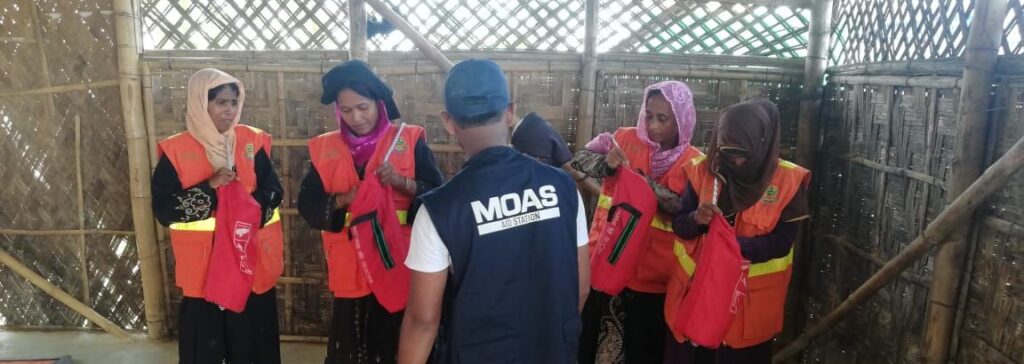
MOAS empowers displaced women by providing practical skills and resources to improve their lives. In Bangladesh, MOAS delivered disaster risk reduction (DRR) training to Rohingya refugee women, equipping them with the knowledge and skills to respond to emergencies and enhance their safety and resilience. Additionally, in Malta, MOAS supports refugee and migrant women through educational opportunities, vocational training, CV writing workshops, and job support, helping them build stronger, more independent futures and improve their employability.
These initiatives emphasize the critical importance of robust support systems in crisis situations. They highlight the essential role of humanitarian aid, workers, and ongoing funding in improving the lives of displaced women and girls.
Final Thoughts
Understanding the specific needs of displaced women and girls is essential for providing effective aid. Amplifying their voices ensures that their needs are met, leading to more targeted and meaningful solutions. International organizations must continue to protect the rights of displaced women and secure the funding necessary to support these efforts.
Empowering displaced women is essential, and MOAS is dedicated to promoting gender equality and raising awareness. We can help create better futures for displaced women and girls worldwide by prioritising their protection and empowerment.
Your support can make a difference. Please consider donating to help us continue our missions and save lives. Visit www.moas.eu/donate to contribute. For more updates on our work, follow us on social media, sign up for our newsletter, or contact us at [email protected].


Disclaimer: “Funded by the European Union. Views and opinions expressed are however those of the author(s) only and do not necessarily reflect those of the European Union or the European Education and Culture Executive Agency (EACEA). Neither the European Union nor EACEA can be held responsible for them.”