On March 8th, we celebrate this day to highlight the importance of gender equality, not only as a fundamental moral and legal right for women but as a cornerstone for achieving peace, prosperity, and a sustainable future for all.
The United Nations has announced the theme for International Women’s Day 2025 as “For ALL women and girls: Rights. Equality. Empowerment.” This year’s focus calls for concrete actions to secure equal rights, power, and opportunities for all, aiming to create a future grounded in feminism where no one is excluded. At the core of this vision is empowering the next generation—youth, particularly young women and girls, who play a crucial role as agents of lasting transformation.
The Origins – Women Making History
Formalised by the United Nations in 1975, International Women’s Day recognises the crucial role of women in history and their centuries-long struggle for equality. Its roots trace back to the labor protests of the 19th century, when women began raising their voices for better working conditions and rights, marking the start of their ongoing fight for equal participation in society alongside men.
However, it was in 1917, in Russia, that a women’s protest changed the course of history. Amid World War I, with millions of soldiers lost on the front lines and the country in crisis, thousands of women took to the streets on the last Sunday of February, demanding “Bread and Peace.” Their strike quickly spread, with metalworkers joining in, and continued despite Tsar Nicholas II’s orders to suppress it by force.
What began as a women’s uprising became the February Revolution, leading to the tsar’s abdication. Shortly after, the provisional government granted women the right to vote, a major milestone in the fight for equality.
This historic protest took place on February 23 in the Julian calendar, which was used in Russia at the time. In the Gregorian calendar, this date corresponded to March 8, which we now celebrate as International Women’s Day worldwide.
The Importance of This Day
This day holds immense significance because it marks a struggle that has endured for centuries, shaped by the deep-rooted discrimination women have faced throughout history, and it continues today. Why? The answer is simple— look at the latest data on the global situation of women.
- One in three women still suffers from gender-based violence.
- 2.7 billion women do not have the same economic rights as men.
- In 2024, women hold only 27% of legislative seats worldwide.
- The gender pay gap will not close until 2086 unless current trends are reversed.
- The share of Fortune 500 companies run by women CEOs remains flat at 10.4%.
These statistics show why it’s more necessary than ever to continue advocating for gender equality. The fight for women’s rights remains far from over, and these statistics remind us that the path to true equality requires sustained effort and commitment.
Women in Humanitarian Contexts and Why We Need More Female Leaders
Women make up 50% of refugees, internally displaced people, and stateless populations, representing more than half of the 100 million displaced globally. In 2023, the number of women killed in armed conflicts doubled, with 40% of all conflict-related deaths being women. Additionally, every day, 500 women and girls in conflict zones die from pregnancy-related complications.
Despite these figures, women made up only 9.6% of peace negotiators in 2023, even though their involvement led to stronger, longer-lasting agreements. For instance, in Yemen, women-led negotiations secured civilian access to water, while in Sudan, 49 women-led organisations are advocating for a more inclusive peace process, yet these efforts remain largely unsupported and unrecognised.
Funding for women’s rights remains critically low. While global military spending hit a record $2.44 trillion in 2023, organisations supporting gender equality receive only 0.3% of total aid, particularly in conflict zones. Investments in preventing and responding to gender-based violence account for less than 1% of humanitarian funding.
MOAS’s Commitment
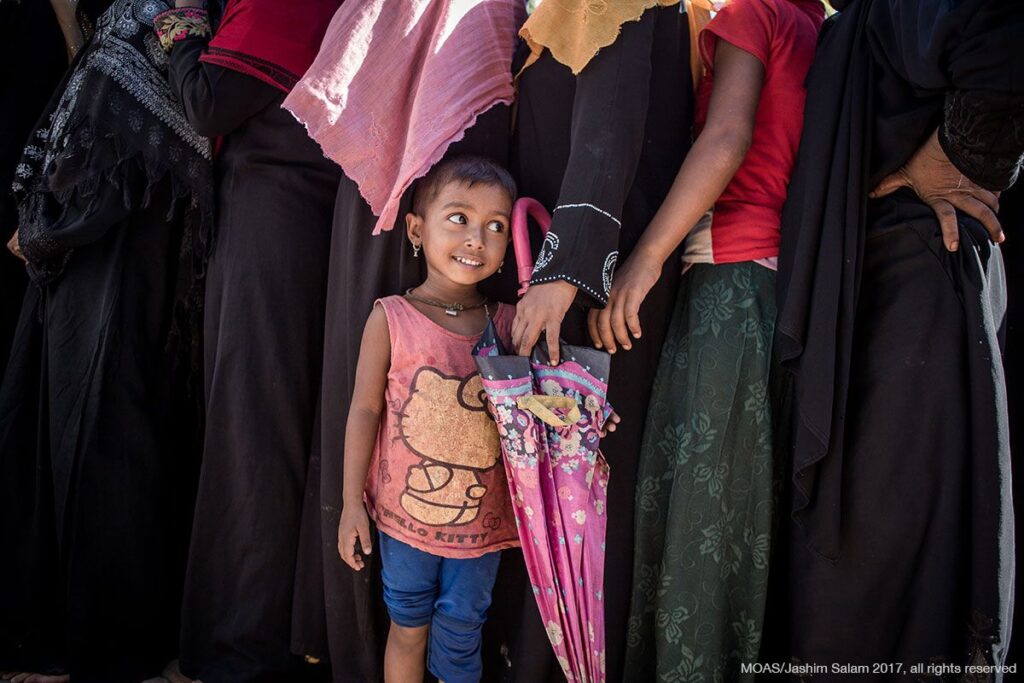
MOAS recognises that gender equality is inherent to social justice, focusing on migrant and refugee women who face unique challenges that require urgent attention and action. By addressing the specific barriers this group encounters, such as limited access to resources, education, and employment opportunities, we can work toward building a more inclusive and equitable future for all. We are committed to empowering women in vulnerable situations and promoting gender equality.
What TO DO and NOT TO DO for this day
There are countless ways to advocate for gender equality, not just on March 8th, but every day! For example, use your voice to engage with media, business leaders and governments, encouraging them to take meaningful action for the community. Push for investments in women’s rights and gender equality, share powerful stories from International Women’s Day to spark conversations and inspire change, and consider supporting organisations actively contributing to the movement for gender equality.
And most importantly, on this day, remember that it’s not about congratulating women. We’re not celebrating being women; we’re fighting for equality, for their rights to be respected, and in remembrance of all the women who have lost their lives in this struggle.
Your support can make a difference. Please consider donating to help us continue our missions and save lives. Visit www.moas.eu/donate to contribute. For more updates on our work, follow us on social media, sign up for our newsletter, or contact us at [email protected].
Funded by the European Union. Views and opinions expressed are however those of the author(s) only and do not necessarily reflect those of the European Union or the European Education and Culture Executive Agency (EACEA). Neither the European Union nor EACEA can be held responsible for them.