
During times of war, the presence of animals can serve multiple—often unexpected—purposes. They assist military and naval operations while psychologically relieving civilians and soldiers. Animals have long played a significant role in areas affected by conflict. In Ukraine and beyond, the relationship between humans and animals in wartime is strategic and profoundly emotional.
Tactical Companions: Animals in Military and Naval Operations
Historically, animals have served in combat zones for transportation, detection, and communication. While horses, mules, and pigeons dominated past battlefields, contemporary conflicts are more technologically advanced—yet animals continue to play an essential role.
In Ukraine, military working dogs are extensively deployed for mine detection, bomb sniffing, and search-and-rescue operations. These specially trained dogs possess an exceptional ability to detect explosives with high accuracy. Units within the State Emergency Service of Ukraine and border guards regularly collaborate with German Shepherds and Belgian Malinois, trained to function in high-risk environments.
One of the most well-known examples is Patron, a Jack Russell Terrier who helped detect hundreds of explosives in the Chernihiv region. According to UNICEF Ukraine, Patron not only saved lives but also became a beloved symbol of resilience for Ukrainian children. He was honoured by President Zelenskyy and featured in educational videos to teach children about landmine risks.
Naval forces have long utilised marine animals for strategic defense. Russia reportedly revived the Soviet-era military dolphin program in Crimea to patrol its Black Sea naval base. According to the U.S. Naval Institute, confirmed through satellite imagery analyzed by naval analyst H. I. Sutton, pens containing dolphins appeared at Sevastopol’s naval base in 2022. These animals are trained to detect enemy divers and underwater mines, adding a defensive layer to ports and strategic coastal areas.
Though controversial due to animal welfare concerns, the continued use of animals in modern military strategy highlights their enduring value in conflict environments.
Animals as Healers: Pet Therapy in War Zones
Beyond tactical use, animals play an increasingly crucial humanitarian role in conflict zones—especially in pet or animal-assisted therapy (AAT). Animal interaction can offer a critical sense of comfort, safety, and stability in areas affected by displacement and trauma.
In Ukraine, several grassroots and nonprofit initiatives have launched therapy dog programs aimed at supporting displaced children, wounded soldiers, and civilians experiencing psychological stress. One such initiative is Zootherapy Ukraine, which brings therapy dogs to hospitals, rehabilitation centres, and shelters. These dogs help reduce anxiety, promote emotional expression, and assist in physical rehabilitation.
Research supports these initiatives. A study published in Frontiers in Psychology found that interactions with therapy animals can lower cortisol levels, reduce symptoms of post-traumatic stress, and enhance cognitive and motor skills among trauma patients. Additionally, the World Health Organization (WHO) emphasises animal-assisted interventions as a promising complement to mental health support in emergencies, particularly for children and adolescents.
Organisations such as the International Federation of Red Cross and Red Crescent Societies (IFRC) and War Child have run similar pilot projects in post-conflict zones like Iraq and Syria, showing positive outcomes in treating trauma through structured animal interactions.
Pets as Family, Pets as Hope
For many people caught in war, pets are more than companions—they are family. In Ukraine, thousands of refugees fled their homes with their animals in tow, choosing not to abandon them despite the uncertainty of escape. In response, bordering countries such as Poland, Moldova, and Romania implemented emergency measures to allow refugees to cross with their pets without documentation or quarantine. Volunteer groups and animal shelters across Europe provided shelter, food, and veterinary care to both pets and strays affected by the war. Organisations like Four Paws International and Humane Society International deployed emergency response teams to help evacuate animals and reunite lost pets with their owners. This deep emotional bond also ties into trauma recovery. The familiar presence of a pet can ease anxiety, especially in children. According to a research study, children who retained contact with a pet during a humanitarian crisis showed significantly better emotional regulation and sleep patterns than those who did not.
MOAS and animals in Ukraine
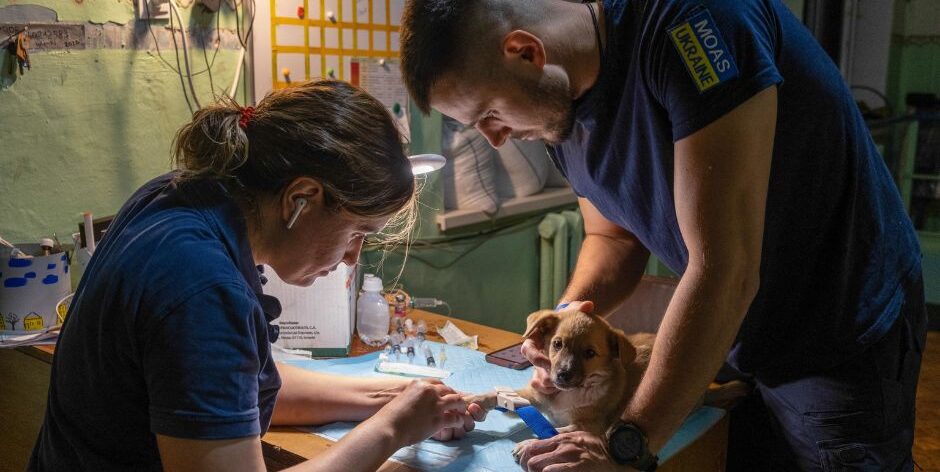
Our brave teams in Ukraine do not make an exception to this. So, in our doctors’ gentle, reliable, and skilful hands, a little puppy got lost in an almost deserted frontline area and ran scared onto the road that our brigade was heading. Of course, kind hearts could not remain indifferent – the MOAS crew stopped and took the poor thing with them. The dog was weak and refusing to eat. We suspected enteritis and began treating the little one. Day and night, we rushed him – defenseless – to alleviate his suffering and restore his health, and within a few days, the dog came back to life. Making sure that everything was fine with the puppy, and worrying about his future, the MOAS specialists found a family and handed the child to good hands. The four-legged friend is alive and well and is a loyal comfort to his owners!
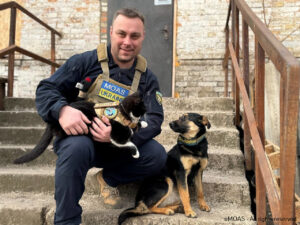
We also have mascots, Lucy and Owen, and a dog and a cat, who stay at one of the MOAS bases. Once strays roaming the streets, this dog-and-cat duo wandered into one of our bases and instantly became part of the family. Welcomed with open arms, they found the comfort, warmth, and affection they had been missing. In return, they offer our team moments of joy and calm amid long, demanding days. In this photo, they’re pictured with Serhiy Kholodkov, who cares for them daily, along with the others.
Final Thoughts
Whether sniffing out explosives, guarding naval ports, or simply providing a warm presence to someone who’s lost everything, animals are more than just companions in conflict—they are lifelines. In Ukraine, as in other conflict zones, the role of animals continues to evolve, blending strategic support with humanitarian impact. For MOAS and our partners, recognising this bond offers new avenues for aid, recovery, and dignity in times of crisis.
As one displaced Ukrainian mother said of her dog: “We didn’t just survive the war together—he helped me stay human.”
If you are interested in the work of MOAS and our partners, please follow us on social media, sign up for our newsletter and share our content. You can also reach out to us at any time via [email protected]. If you want to support our operations, please give what you can at www.moas.eu/donate.


Disclaimer: “Funded by the European Union. Views and opinions expressed are however those of the author(s) only and do not necessarily reflect those of the European Union or the European Education and Culture Executive Agency (EACEA). Neither the European Union nor EACEA can be held responsible for them.”