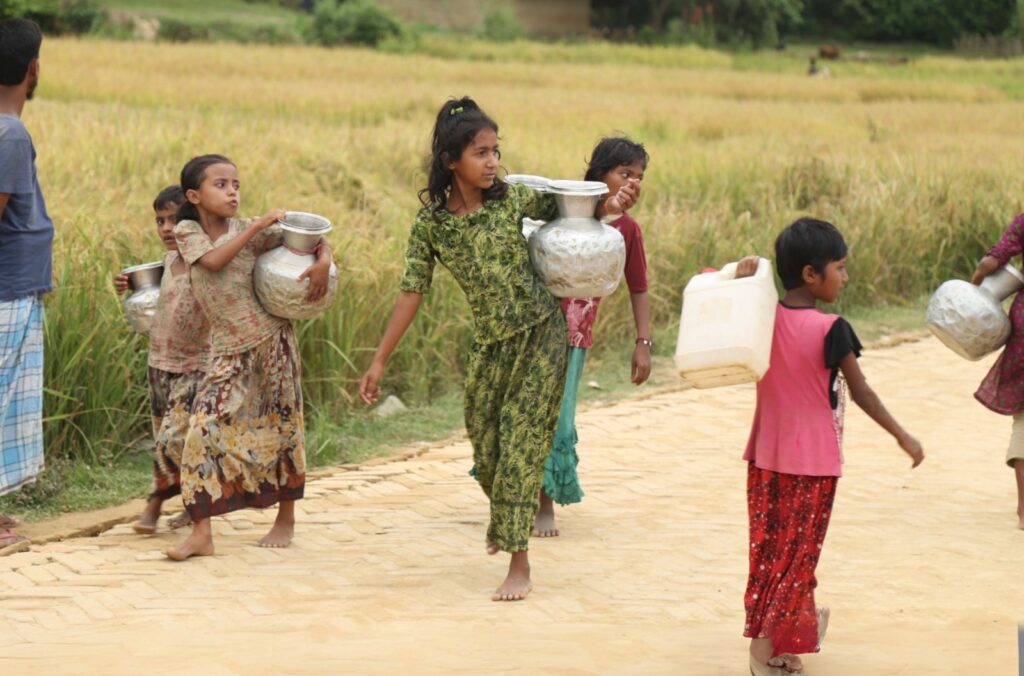
Water is the foundation of life, yet its scarcity is becoming one of the most pressing challenges of our time. Climate change, population growth, urbanization, and inefficient water management have intensified the global water crisis, disrupting agriculture, industry, energy production, and public health. Millions of people worldwide face daily struggles to access clean water, with devastating socio-economic consequences that widen inequalities and threaten sustainable development. In conflict zones and refugee camps, women and girls are disproportionately affected by water scarcity, facing unique challenges that impact their health, safety, and daily responsibilities.
The Impact of Water Scarcity on Women
In areas of crisis, women often bear the brunt of water collection duties. This responsibility not only consumes a significant portion of their day but also exposes them to risks such as sexual violence and exploitation. For instance, in the Democratic Republic of Congo (DRC), women and young girls must travel long distances to fetch water, often leaving their homes before dawn and returning late in the day, increasing their vulnerability to assaults. Similarly, in the Horn of Africa, the water crisis forces millions of girls and women to walk longer distances, heightening the risk of sexual abuse and limiting their access to education.
Health Consequences
The lack of clean water exacerbates health issues, particularly for pregnant and lactating women. In Gaza, for example, the severe water scarcity has led to dehydration among breastfeeding mothers, reducing breast milk supply and negatively impacting infant health. Waterborne diseases such as cholera and dysentery are prevalent in areas with inadequate sanitation, further endangering the health of women and children.
Role of Women in Water Management
Despite these challenges, women play a critical role in managing and distributing water resources in refugee camps and conflict areas. In the Kakuma refugee camp, women have developed innovative strategies to cope with water scarcity, including collaborative water collection and barter systems. These efforts not only ensure access to clean water but also demonstrate women’s resilience and resourcefulness in the face of adversity.
Ensuring Access to Clean Water
Ensuring access to clean water is essential for the health, safety, and dignity of women and girls in crisis zones. Organizations like MOAS recognise the importance of addressing water scarcity as part of broader humanitarian efforts. By supporting initiatives that improve water infrastructure and promote gender-inclusive water governance, we can help mitigate the disproportionate impacts of water scarcity on women.
Strategies for Change
To address the challenges faced by women in areas of crisis, several strategies can be employed. Investing in water infrastructure that provides safe and accessible water points is crucial, as it can reduce the risks associated with water collection by ensuring that water distribution points are centrally located and accessible during daylight hours to minimise risks of violence. Encouraging women’s participation in water management processes is also vital, as gender-inclusive approaches can help identify and address the specific needs of women and girls, ensuring that water resources are managed equitably. Empowering local communities, particularly women, to manage water resources can enhance resilience and sustainability, which includes providing education on water conservation and hygiene practices. Finally, in conflict zones, humanitarian responses must prioritize the provision of clean water and sanitation facilities, as this not only saves lives but also helps restore dignity and stability to affected communities.
MOAS Commitment
At MOAS, we are deeply committed to addressing the humanitarian needs of communities affected by crisis. By working together with local communities and international partners, we can make a meaningful difference in the lives of women and girls facing water scarcity.
Final Thoughts
Water scarcity in areas of crisis is not just a humanitarian issue; it is a gendered crisis that disproportionately affects women and girls. By recognising women’s critical role in managing water resources and addressing their unique challenges, we can work towards a more equitable and sustainable future. As we continue to navigate the complexities of the global water crisis, it is essential to prioritize the needs of the most vulnerable populations. Together, we can help ensure that water, the foundation of life, is accessible to all, and that no woman or girl must suffer the devastating consequences of its scarcity.
Your support can make a difference. Please consider donating to help us continue our missions and save lives. Visit www.moas.eu/donate to contribute. For more updates on our work, follow us on social media, sign up for our newsletter, or contact us at [email protected].
Funded by the European Union. Views and opinions expressed are however those of the author(s) only and do not necessarily reflect those of the European Union or the European Education and Culture Executive Agency (EACEA). Neither the European Union nor EACEA can be held responsible for them.