
The situation in Ukraine has significantly deteriorated over the past two months, with the conflict intensifying and, at times, expanding beyond the front lines on the eastern front. Russian forces have made territorial gains in the Donetsk region, capturing key settlements and increasing attacks on civilian areas, including Kyiv.
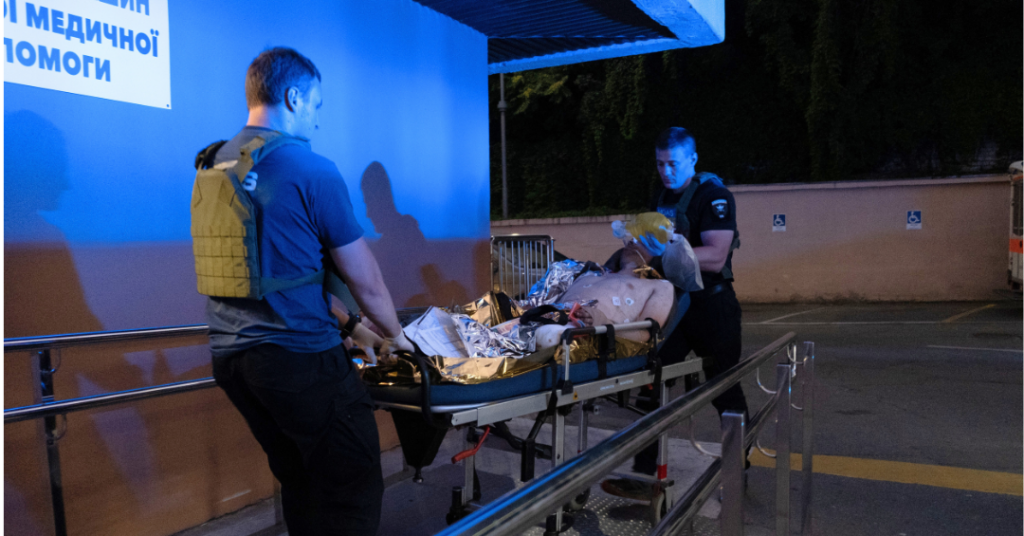
MOAS has been active in Ukraine since the early stages of the expanded invasion that began in February 2022, providing critical medical support to those affected by the war. Currently, MOAS operates a fleet of 50 ambulances staffed by 150 medical professionals, working daily to save lives and treat patients with trauma injuries caused by artillery fire, small arms, and other battlefield injuries.
However, the recent escalation has created new challenges for our mission. The expanded conflict zone has stretched our resources thin, and increased attacks on civilian areas have made it harder for our teams to reach those in need safely. Additionally, MOAS is facing a severe funding shortage that threatens to halt our operations by the end of the month if additional support is not secured.
Background Of The Conflict
The Russia-Ukraine conflict has its roots in earlier tensions, but the full-scale Russian invasion launched on February 24, 2022, marked a significant escalation. In February, the war will enter its fourth year having already generated significant humanitarian consequences.
The conflict has profoundly impacted Ukraine’s population and infrastructure. Approximately 12.7 million people – about a third of Ukraine’s population – need humanitarian assistance in 2025. As of October 2024, over 3.5 million people were internally displaced in Ukraine, and 6.7 million refugees had sought safety in other countries, including 6.2 million across Europe.
Nearly 11,000 Ukrainian civilians have lost their lives to the conflict since the war began in 2022, according to reports from October 2024. The conflict intensified throughout 2024, with a 63% increase in average monthly battles compared to 2023. Continuous attacks have led to severe damage to housing, water and electricity supply, heating, and public infrastructure in general, leaving millions with limited or no access to basic services.
Escalation Over the Past Two Months
While much of the fighting over the past three years has been concentrated along the roughly 1,000-kilometer-long frontline in eastern and southern Ukraine, recent months have seen a troubling expansion of attacks beyond these areas. Kyiv has come under increased missile and drone strikes, with air raid sirens becoming a near-daily occurrence in the capital. Elsewhere, regions such as Zaporizhia, Kherson, Kharkiv, and Dnipropetrovsk have experienced heightened shelling and aerial bombardments. According to UN reports, civilian casualties have risen sharply; at least 574 civilians lost their lives due to these attacks in recent months—a 30% increase compared to the same period last year.
The conflict is no longer confined to traditional frontlines. Long-range missile strikes and drone attacks are now targeting infrastructure deep inside Ukrainian territory. This includes energy facilities, transportation hubs, and healthcare centers—all critical for civilian survival during wartime.
MOAS Operations in Ukraine
Since early 2022, MOAS has been providing critical medical assistance to those affected by the war in Ukraine. Today, MOAS operates a fleet of 50 fully-equipped ambulances staffed by 150 medical professionals—including doctors, paramedics, and drivers—who work tirelessly to save lives on the front. Our services include both basic and advanced life support for those injured in combat or affected by attacks on civilian areas.
To date, MOAS’ teams have saved over 63,000 lives , reflecting not only our commitment but also the scale of need across Ukraine.
Challenges For Our Mission
The intensified hostilities over recent months have created new challenges for MOAS’ operations in Ukraine. Increased attacks mean that more people require urgent medical care while also making it harder for our teams to safely reach those in need. The expanded conflict zone has made it harder to navigate even areas further from the frontline and has stretched our resources thin as we work to respond effectively across multiple regions.
At the same time, funding for humanitarian operations remains critically low—an additional challenge that threatens our ability to sustain current programming or expand services as demand increases. While our team remains committed to saving lives under these difficult circumstances, additional support is urgently needed to ensure we can continue delivering vital care where it is needed most
Looking Ahead
Recent developments underscore how critical it is for us—and other humanitarian organizations—to continue our efforts in Ukraine. While we remain hopeful that diplomatic efforts and international pressure might reduce hostilities, our commitment to supporting Ukrainian civilians remains unwavering. The situation on the ground is dire, but with your help, we can continue our vital work and stand with the people of Ukraine.
Give what you can now to support MOAS mission and save lives.
Your support can make a difference. Please consider donating to help us continue our missions and save lives. Visit www.moas.eu/donate to contribute. For more updates on our work, follow us on social media, sign up for our newsletter, or contact us at [email protected].