
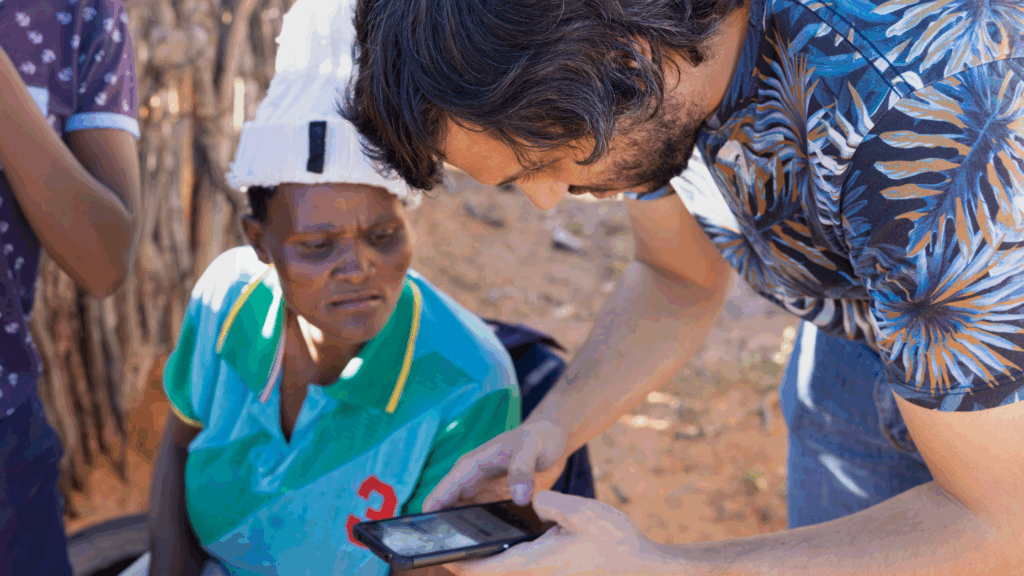
On World Humanitarian Day, we honour those who dedicate their lives to alleviating suffering and providing aid during crises. However, the face of the humanitarian worker is evolving. A new, adaptable generation is emerging – the “Backpack Humanitarians.” These young individuals are not simply following in the footsteps of their predecessors; they are redefining what it means to be a humanitarian in the 21st century. This new wave of humanitarians combines mobility, digital fluency, and a profound global awareness. They represent a departure from the “old-school” aid worker stereotype, driven by a fresh set of values and skills essential for today’s complex and interconnected world.
Digital Natives with strong Commitment
Today’s young humanitarians are digital natives, wielding technology and social media not just for communication, but as powerful tools for organization and advocacy. They leverage platforms to connect with local communities, disseminate critical information, and mobilize support in ways that were unimaginable a generation ago. This digital fluency allows them to “hack the system” by creating their networks and bypassing traditional bureaucratic hurdles. Instead of waiting for official channels to move, they use their skills to create innovative solutions. For example, a humanitarian backpacker might use a mesh network device to set up a local communication hub after a disaster, allowing people to share information and coordinate help without relying on damaged infrastructure. Another approach might involve using social media to verify on-the-ground needs, thereby connecting donors directly with those who need aid most and ensuring resources are allocated swiftly and transparently.
The Professionalisation of Passion
The traditional image of an aid worker was often romanticized: a person driven solely by goodwill. While passion remains the primary motivator, today’s young humanitarians recognize that effective aid is also a profession that requires specific, verifiable skills. They highlight the importance of robust protocols, long-term sustainability plans, and strict accountability in their humanitarian efforts. This change reflects a growing realization within the sector that effective aid demands not only empathy but also a high level of expertise and strategic planning.
This focus on professionalization means they are more likely to:
Pursue Formal Training: This generation is enrolling in specialised courses and certifications in fields such as project management, logistics, and specific skills like WASH (Water, Sanitation, and Hygiene) or digital security. Organisations like the European Solidarity Corps (ESC) and other training providers are responding to this demand by offering structured programmes that deliver not only experience but also clear, competency-based learning.
Embrace Accountability: Accountability is a fundamental principle for this generation. It’s not just about reporting to donors; it’s about being responsible to the communities they serve. This includes transparent communication, creating accessible feedback mechanisms, and genuinely involving local people in the design and implementation of projects. The goal is to shift away from a top-down, “us-to-them” model of aid towards a more equitable partnership.
Prioritise Sustainability: They recognise that temporary aid can sometimes create dependency. Therefore, this new generation is committed to building long-term sustainability plans into their projects from the very beginning. This might mean training local community members to manage a new water system, using eco-friendly and locally sourced materials for construction, or helping communities build their disaster preparedness and early warning systems. The aim is to empower vulnerable people to be resilient and self-sufficient, ensuring that the positive impact of a project lasts long after the humanitarian workers have moved on.
An Activist Mindset
Backpack humanitarians aren’t neutral. They take sides – on the side of justice. For them, delivering aid is only part of the mission; the rest is about changing the system that causes inequality in the first place. They fight for climate justice, highlighting how its effects disproportionately affect those who contribute least to climate change. They push for gender equality, breaking down the barriers that keep women and girls from education, leadership, and safety. And they put refugees at the centre of the story, replacing stereotypes with authentic voices and lived experiences.
Social media becomes their megaphone: live-streaming from border crossings, running digital campaigns that mobilise thousands in hours, or creating bilingual content to reach both local and international audiences.
This activism is deeply networked, connecting grassroots organizers in remote areas with urban policy advocates, and linking local struggles to global movements. As highlighted in the International Review of the Red Cross, their approach blends the speed and scale of digital communication with the trust and nuance of community-led action. In doing so, they turn humanitarianism into a call to justice, a bridge between global digital reach and tangible impact on the ground.
The Rise of Youth Leaders
Young people are not just passive participants in humanitarian efforts; they are emerging as the new leaders. This generation is passionate about amplifying youth voices and creating space for their peers to take the lead. They are driving a shift in the sector, where young people are recognised as powerful agents of change, capable of shaping policies, influencing decision-makers, and delivering effective local responses.
Equipped with scientific knowledge, digital tools, and a collaborative spirit, they are reimagining how aid is planned, delivered, and communicated. In crisis-hit communities, many are launching their own initiatives: youth-led disaster preparedness workshops, peer-to-peer mental health networks, and grassroots advocacy campaigns.
What sets these young leaders apart is their combination of innovation, urgency, and a deep understanding of local realities. They link lived experience with global perspectives, demonstrating that when youth lead, resilience increases and communities gain the autonomy to shape their recovery.
A Refugee-Centric and Community-Led approach
Many in this generation come from, or work closely with, displaced communities, and that proximity influences everything they do. Having experienced migration, exile, or conflict firsthand, they understand the challenges of starting anew in a different country, accessing vital services, and cultivating a sense of belonging. This lived experience drives advocacy that positions refugees as active agents of change rather than passive recipients of aid.
They champion programs where refugees design and lead the solutions that shape their own futures – whether it’s running education initiatives, influencing housing policy, or creating livelihoods projects. A refugee-led organization, for example, can offer culturally sensitive mental health support in the community’s language, using concepts that truly resonate. They are also better positioned to identify and reach the most vulnerable, such as unaccompanied children or marginalized women, without the bureaucratic delays that can slow larger agencies.
For backpack humanitarians, partnering with displaced people is not an act of charity; it’s a recognition of expertise. Refugees bring skills, knowledge, and networks that make humanitarian responses more effective, inclusive, and rooted in real needs. By shifting the narrative, this generation is transforming displacement from a label into a source of leadership and innovation.
Final Thoughts
This World Humanitarian Day reminds us that the face of aid is evolving. We at MOAS recognise that the emergence of Backpack Humanitarians signifies a new era characterized by mobility, digital fluency, and a strong dedication to justice. They are activists, innovators, and professionals who collaborate with communities, not above them, creating solutions that endure beyond the crisis.. Whether establishing youth-led initiatives, amplifying refugee voices, or using technology to bypass bureaucracy, they are redefining what humanitarian action means in the 21st century.
The next chapter of aid is being written and they are the ones writing it.
Your support can make a difference. Please consider donating to help us continue our missions and save lives. Visit www.moas.eu/donate to contribute. For more updates on our work, follow us on social media, sign up for our newsletter, or contact us at [email protected].

Disclaimer: “Funded by the European Union. Views and opinions expressed are however those of the author(s) only and do not necessarily reflect those of the European Union or the European Education and Culture Executive Agency (EACEA). Neither the European Union nor EACEA can be held responsible for them.”