
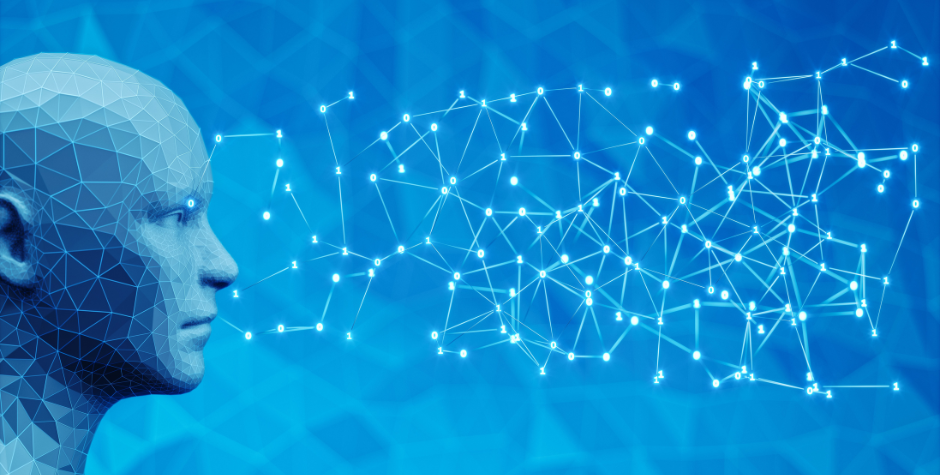
The border seemed calm that morning, a stretch of metal barriers and glass booths gleaming in the sunlight. But for Amina, a young woman escaping conflict, stepping forward felt like being scrutinised under a microscope. Cameras scanned her face, sensors recorded her fingerprints, and an algorithm decided whether her story matched the “risk profiles” embedded in the system. To the officers, it was just technology at work. To Amina, it was a judgment on her very humanity – one she neither understood nor had the power to contest. Her experience is not unique.
Across the world, asylum seekers and migrants increasingly face AI and biometric technologies at borders, with human rights organisations documenting how digital surveillance and automated systems are used to monitor, assess, and sometimes exclude those most vulnerable.
Artificial intelligence is increasingly shaping how countries manage migration, security, and public services. It can process large amounts of data in seconds and is often praised for making systems more “efficient” or “smart.”
But efficiency for whom? And at what cost? Across the world, governments and companies are racing to adopt AI, often describing it as the key to progress, competitiveness, and national security. In this rush to innovate, human rights – privacy, dignity, equality – risk becoming an afterthought. Large-scale digital surveillance programmes at European borders are expanding rapidly, often without adequate safeguards or transparency. As a matter of fact, predictive analytics and automated decision-making in asylum and migration processes can entrench discrimination and reduce accountability. Moreover, data-driven migration management may erode the right to privacy and the principle of proportionality enshrined in EU law.
Racing Toward AI Supremacy: The Human Rights Risks of Innovation
“AI leadership”; “Digital sovereignty”; “The innovation race”.
These terms now appear in almost every government strategy and tech headline. Around the world, countries are competing to become global leaders in artificial intelligence, seen as often framed as the engine of economic growth, national security, and modernisation.
The European Union’s Coordinated Plan on Artificial Intelligence calls for “boosting innovation ecosystems” to keep Europe competitive in the global AI market. In the United States, the National AI Initiative Act positions AI as central to national security and global influence. China’s Next Generation AI Plan goes even further, describing AI dominance as key to the country’s rise as a “global power”.
But as governments and corporations chase innovation, human rights safeguards often struggle to keep pace. The rapid deployment of AI systems across borders, policing, and welfare has outpaced meaningful oversight or ethical review. In practice, this means technologies are frequently launched before their impacts on privacy, equality, or accountability are fully understood.
This drive to prioritize innovation isn’t just about policy – it reflects a deeper cultural mindset. When speed and growth define progress, human rights risk being treated as obstacles. Leaders urge faster technological development, while companies argue that too many rules slow advancement. The result is a growing perception that protecting people and advancing technology cannot go hand in hand. Yet history tells a different story. Rights-based regulation, from data protection laws like the General Data Protection Regulation (GDPR) to the forthcoming EU Artificial Intelligence Act (2024), has not stopped innovation. It has made it trustworthy. As the European Data Protection Supervisor argues, ethical safeguards are what allow societies to benefit from technology without sacrificing the principles of dignity and fairness.
Technology at the Border: The Human Impact of AI in Migration
In recent years, artificial intelligence has moved from tech labs into the core of migration and border management systems. Governments now use digital tools not only to track who crosses a border but also to predict who might try to, and to automate decisions that can shape a person’s future. These systems are increasingly being used to help manage migration flows, verify identities, and assess “risks.” In the European Union, for example, border authorities are adopting AI-powered technologies to enhance surveillance and screening. The European Border and Coast Guard Agency (Frontex) has piloted projects using AI to analyse satellite imagery and detect irregular crossings. The EU’s Entry/Exit System uses facial recognition and fingerprint scanning to register non-EU travellers entering or leaving the Schengen Area automatically.
A key concern is the deployment of AI in predictive analytics, which are systems designed to forecast migration trends, identify potential “risk groups,” or assess the likelihood of someone receiving asylum. These systems often rely on incomplete or biased data, which can lead to unfair or inaccurate outcomes. When human lives are involved, an error in an algorithm isn’t just a technical glitch – it’s a human consequence.
These technologies are often justified as tools for “efficiency,” “security,” or “innovation.” Yet as migration systems become more automated, the line between protection and control grows increasingly blurred. Now the question is no longer if AI should be part of migration management, but how it can be used responsibly, without undermining the very rights that international law was built to defend.
When Algorithms Decide: Privacy, Bias, and Exclusion at Borders
Behind every border camera, database, or algorithm, there’s a human story.
For many migrants and asylum seekers, these technologies don’t represent safety, but scrutiny. Beyond discrimination, privacy is a central concern. The European Union Agency for Fundamental Rights (FRA) warns that the large-scale collection of biometric data – fingerprints, facial scans, iris patterns – creates long-term digital traces that may be impossible to delete. When such data is shared across agencies or borders, migrants often have no way to know who holds it or how it might be used.
This constant surveillance can lead to what experts call a chilling effect: people might censor themselves, avoid authorities, or hesitate to seek help out of fear of being tracked or profiled. For those fleeing persecution, this fear can be devastating. What’s especially worrying is that these harms are rarely addressed in policy debates. The focus often stays on the promise of advanced borders and digital solutions, while the voices of those most affected are left out of the design process. When AI systems are developed without involving the communities they influence, they risk increasing exclusion rather than providing protection.
Human-Centric and Humanitarian Perspectives
Humanitarian organisations urge embedding AI development within frameworks of humanity, impartiality, neutrality, and independence. Practical integration of AI in crisis response – such as refugee protection and gender-based violence interventions – should always assess risks to affected populations, ensure transparency, and respect dignity.
- AI offers powerful tools for SDG and human rights monitoring, making data-driven decision-making possible on an unprecedented scale. Still, ethical implementation and robust safeguards are non-negotiable to prevent repression, discrimination, or the exclusion of vulnerable groups.
- The International Committee of the Red Cross and other humanitarian actors advocate for context-sensitive governance, eschewing one-size-fits-all technical solutions and prioritizing the “not harm” principle.
Final Thoughts
As artificial intelligence continues to shape the way our societies manage migration and security, we stand at a defining crossroads. Technology holds immense potential to improve lives, but only if guided by the principles that protect our shared humanity. Innovation should not deepen inequality or strip away dignity – it should serve as a tool for compassion, fairness, and inclusion.
At MOAS, we believe that every advancement must be grounded in respect for human rights, ensuring that progress never comes at the expense of people. In an age where machines increasingly make decisions about human lives, our responsibility is clear: to make sure that humanity remains at the heart of innovation.
Your support can make a difference. Please consider donating to help us continue our missions and save lives. Visit www.moas.eu/donate to contribute. For more updates on our work, follow us on social media, sign up for our newsletter, or contact us at [email protected].


Disclaimer: “Funded by the European Union. Views and opinions expressed are however those of the author(s) only and do not necessarily reflect those of the European Union or the European Education and Culture Executive Agency (EACEA). Neither the European Union nor EACEA can be held responsible for them.”