Humanitarian work is often romanticised. The image of aid workers as tireless heroes, rushing into conflict zones to save lives, shapes media narratives and public perception. Although this image reflects part of the truth, it overlooks the complexities, obstacles, and ethical questions that define humanitarian action.
At MOAS, our efforts to support communities in crisis often highlight how widespread these misconceptions are. Addressing them is crucial to developing a clearer understanding of what humanitarian work really entails.
1. Humanitarian Aid Is About Instant Solutions
One of the most common myths is that humanitarian aid delivers quick, one-off fixes. Media stories often highlight the dramatic moment when emergency supplies reach people in need, creating the illusion that the crisis ends with this moment.
In truth, humanitarian action often focuses on immediate needs – food, water, shelter, and medical care – but building long-term resilience requires considerably more time and effort. For example, distributing emergency nutrition packets can save lives in the short term, but addressing chronic malnutrition demands investments in agricultural systems, education, and local infrastructure to prevent and break the cycle of hunger.
At MOAS, we have learned that emergency responses must be closely connected to long-term strategies. After providing life-saving aid, we collaborate with local partners to strengthen healthcare, education, and other vital systems, helping communities not only recover but also thrive beyond the immediate crisis.
2. Aid Workers Operate Alone
Another widespread false perception is that humanitarian work is a solitary mission of courage. The truth is far different: it is a highly coordinated, collaborative effort.
No single organisation, no matter how experienced or well-resourced, can meet the scale of today’s humanitarian needs alone. Effective responses depend on networks of local communities, NGOs, international agencies, and governments working together.
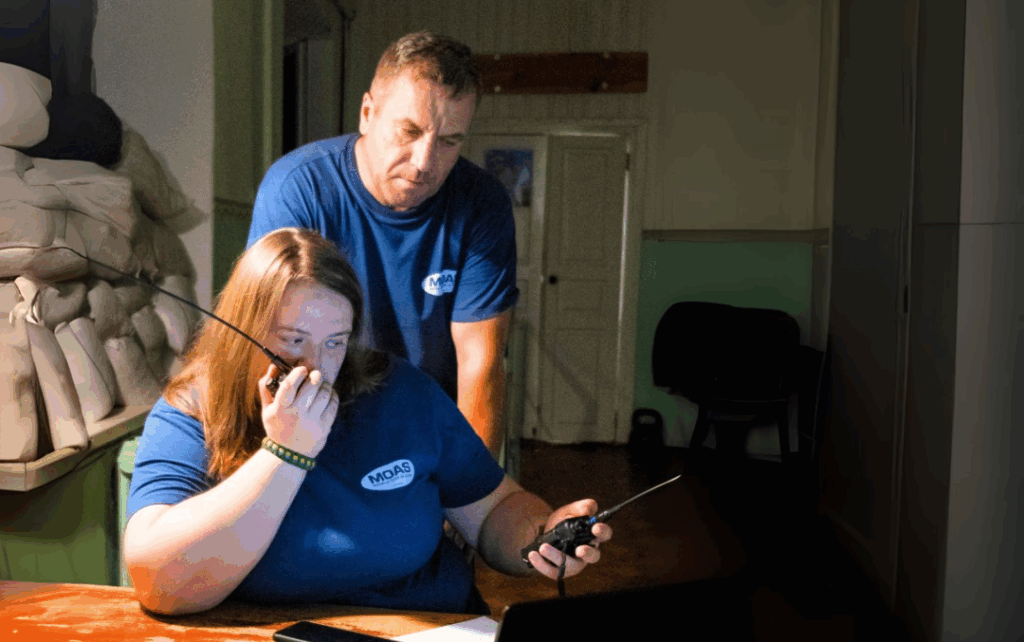
At MOAS, our work illustrates this reality daily. Whether coordinating medical emergency evacuation missions or delivering aid in remote areas, we depend on local knowledge, partnerships with authorities, and global networks to ensure that assistance reaches those who need it most, safely and effectively.
3. Humanitarian Work Is Free from Politics
Humanitarian aid is often seen as completely neutral, unaffected by political or social influences. However, delivering aid in practice almost always involves navigating complex political terrain.
Decisions on where and how aid is delivered are often shaped by local governance, conflict dynamics, and international relations. Negotiating access to vulnerable populations, for example, may involve dealing with authorities or groups controlling certain territories.
Recognising these realities does not mean abandoning humanitarian principles like neutrality and impartiality. Instead, it emphasises the importance of transparency, accountability, and ethical decision-making. At MOAS, we continuously evaluate our work to ensure it upholds dignity and fairness, even in politically sensitive environments.
4. Anyone can do humanitarian work without training
Humanitarian work is often viewed as a matter of goodwill, but in reality, it requires a high level of expertise and meticulous preparation. From medical evacuations under fire to logistics planning in hard-to-reach areas, every step requires trained professionals who can act quickly and responsibly under pressure.
At MOAS, our missions in Ukraine, Sudan, Somalia, and the Mediterranean have shown that compassion alone is not enough: our teams of paramedics, doctors, logisticians and communications staff must work with precision and coordination to save lives. Professionalism is what transforms good intentions into effective, lifesaving action.
5. Most aid money is allocated to administration rather than directly to people in need.
A common misconception is that humanitarian organisations spend most of their funds on overhead costs rather than on actual aid delivery. In reality, strong administrative systems are what make humanitarian missions effective and accountable. Monitoring, staff safety, transparent reporting, and compliance are essential, not luxuries; they ensure that every euro reaches those who need it most.
MOAS, for example, operates a lean structure where donations are directly allocated to field operations, such as running a fleet of ambulances in Ukraine, delivering therapeutic food in Somalia and Sudan, or supporting integration projects in Malta. The administrative backbone guarantees that these resources reach the right people, in the right way, at the right time. In full transparency.
6. All Aid Is Helpful
Finally, there is a belief that all humanitarian assistance naturally improves lives. Unfortunately, aid that is poorly planned or disconnected from local realities can unintentionally cause harm by creating dependency, undermining local economies, or even escalating tensions.
Interventions must be designed with cultural sensitivity and local participation to avoid these pitfalls. Likewise, long-term development and local ownership are key to ensuring that humanitarian programs foster resilience rather than dependency.
MOAS adopts a community-driven approach in all its programmes. Before initiating any intervention, we involve local leaders, health workers, and families to ensure that our support enhances existing capacities and respects cultural norms, establishing the foundation for lasting change.
Final Thoughts
Humanitarian work is neither simple nor purely heroic. It is a complex, collaborative, and ethically demanding field that requires expertise, long-term commitment, and a deep understanding of local realities. By challenging common misconceptions, we can foster more informed public support and, ultimately, achieve better outcomes for those living through crises. At MOAS, we believe that honest conversations about the challenges and limitations of humanitarian work help build trust, encourage responsible action, and ensure that humanitarian responses truly serve the people who need them most.
Your support can make a difference. Please consider donating to help us continue our missions and save lives. Visit www.moas.eu/donate to contribute. For more updates on our work, follow us on social media, sign up for our newsletter, or contact us at [email protected].
Disclaimer: “Funded by the European Union. Views and opinions expressed are however those of the author(s) only and do not necessarily reflect those of the European Union or the European Education and Culture Executive Agency (EACEA). Neither the European Union nor EACEA can be held responsible for them.”