
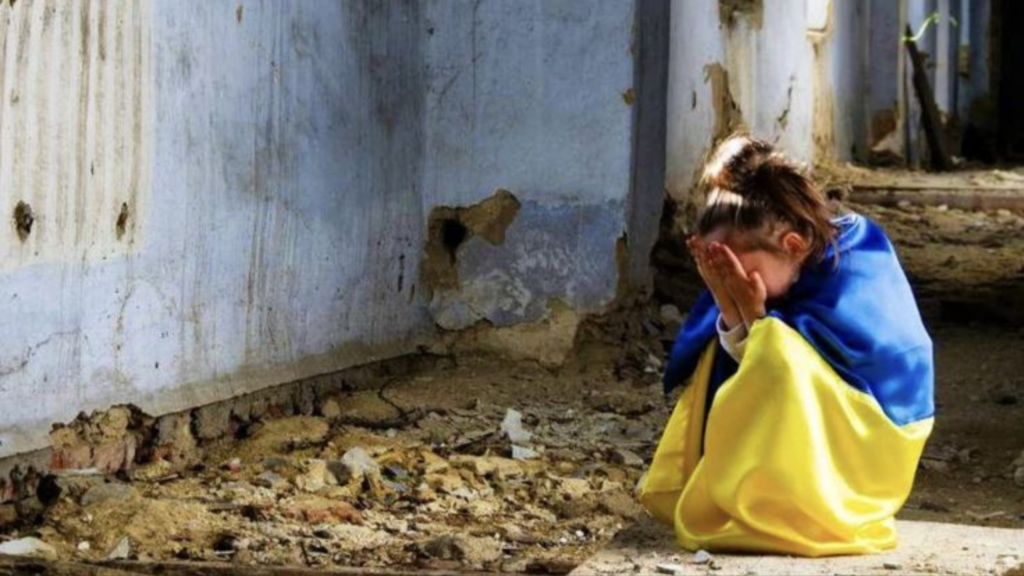
The frontline in Ukraine continues to shift, reshaping daily life for millions and redefining what humanitarian access looks like in real time. Communities living close to active hostilities face constant uncertainty, from sudden shelling to disrupted services and unpredictable movement restrictions. For humanitarian actors, every kilometre closer to the line of contact brings new constraints, new risks and new responsibilities. Yet amid this instability, one constant remains: the resilience of civilians and the unwavering commitment of medical teams working to save lives under extraordinary pressure.
It is within this landscape of danger, adaptation, and solidarity that MOAS teams continue their work.
When Access Narrows
Healthcare Access Under Strain
Ukraine’s health system remains critically affected by the war. According to the Ministry of Health, 2,562 medical facilities across 819 institutions have been damaged or destroyed, with 328 facilities completely destroyed as of February 2026. The heaviest losses are concentrated in Donetsk, Kharkiv, Kherson, Luhansk, Zaporizhzhia and Mykolaiv oblasts. While 725 facilities have been fully restored and 324 are undergoing repairs, the system continues to operate under immense strain, especially as surviving hospitals in central and western regions absorb patients displaced from frontline areas.
Security risks also shape access. Shelling, airstrikes and the threat of renewed attacks often compel civilians to delay or avoid seeking medical care. With 234 hospitals relocated to alternative premises, many patients face additional logistical barriers to treatment. The destruction of 284 emergency medical vehicles, damage to 175 more, and the seizure of 80 by Russian forces further complicate emergency response capacity.
Growing Medical Needs
Medical needs continue to rise. WHO estimates that 4.1 million people in Ukraine will require medical assistance in 2026, while 10 million are affected by the mental health crisis. Trauma care, chronic disease management and psychological support remain the most urgent needs, a trend confirmed by frontline medical teams.
Evacuations: Frequent, Complex and High‑Risk
Medical evacuations remain both frequent and increasingly complex. While no national aggregate exists, MOAS evacuated approximately 560 patients in April 2026, nearly half of whom were in critical condition. In 2025, MOAS teams carried out around 10,300 evacuations, with 36% involving severely wounded patients.
Evacuation routes are shaped by destroyed roads and bridges, damaged transport networks, unpredictable shelling, fuel shortages and administrative restrictions.
FPV drones have become a defining threat. According to Ukrainian military administrations and international observers, FPV drone activity has increased sharply in frontline cities such as Sloviansk, Kramatorsk and the Zaporizhzhia sector, with drones now striking civilian areas up to 100 km behind the line of contact. National medical reports confirm injuries among civilians, including children and elderly people, caused by FPV drone attacks.
For medical teams, this insecurity means travelling in ambulances that can be directly targeted, navigating evacuation corridors that may become unusable within minutes and working under the constant psychological pressure of knowing that every journey carries real and immediate risk.
Supply Chains and Equipment Needs
Delivering medical supplies has become increasingly difficult, with medicines and equipment often delayed or rerouted due to damaged infrastructure and ongoing security risks. MOAS teams report urgent needs ranging from fuel, at least 30 tons of diesel each month to keep 19 intensive care ambulances moving, to constant technical maintenance for vehicles that have already logged 600,000–800,000 kilometres. Many of the critical medical devices used in frontline evacuations now require urgent replacement or servicing and essential supplies, from life‑support equipment to basic consumables, must be replenished constantly to keep intensive care ambulances fully operational. Yet despite these pressures, MOAS teams continue to carry out successful missions every day, guided by the belief that, as one team member put it, “every evacuated patient, every given chance at life, is already a successful mission.”
Living With Uncertainty: What Insecurity Means for Families, Elderly People and Those With Chronic Illnesses
For families living near the frontline or in occupied territories, insecurity shapes every aspect of daily life. Parents often keep children indoors for long periods due to shelling, drone activity and the unpredictability of attacks. Some families describe learning to distinguish the sound of a missile launch from the sound of impact, a coping mechanism born from prolonged exposure to danger.
Elderly residents are among the most vulnerable.One woman living about 30 kilometres from the frontline told us she rarely leaves her home anymore. The risks are simply too high, she said, and there are few places left where she feels safe enough to walk or meet others. Electricity outages are frequent, which also disrupts water supply. Gas shortages have become common and fuel is often unavailable. Internet access is heavily restricted by Russian authorities, requiring VPNs to reach external websites, making communication with relatives difficult. When this woman briefly left the occupied territory to visit family abroad, she returned to find herself interrogated about where she had gone and why, a reminder of the pervasive surveillance and pressure civilians face.
Schools in occupied territories are heavily Russified. A teacher from an occupied area told us that classrooms are now filled with oversized portraits of Russian leaders and every morning begins with a compulsory flag‑raising and the singing of the Russian anthem. She described how the school corridors are lined with displays praising so‑called ‘heroes of the special military operation,’ creating an atmosphere designed to shape how children see themselves and the world around them.
Access to specialised medical care is extremely limited in occupied areas. Only generic medicines are available and many specialists have left. One elderly woman needed surgery but had to travel to Russia to receive it, paying out of pocket. For those with chronic illnesses, the lack of medication and professional care poses life‑threatening risks.
Despite Insecurity, Solidarity Endures
Across Ukraine, insecurity continues to shape daily life and humanitarian operations, from damaged hospitals to drones‑threatened evacuation routes and communities living under occupation. Yet amid these challenges, the resilience of civilians and the dedication of medical teams stand out as powerful reminders of hope.
MOAS teams continue to operate along the evacuation line, travelling thousands of kilometres each day to reach the wounded, support isolated communities and provide life‑saving care under extraordinary pressure. Their work is a testament to the belief that every act of care matters, even and especially in the most difficult conditions.
The courage of civilians, the professionalism of medical responders and the solidarity shown across communities reflect a shared commitment to protecting life and dignity. As long as this commitment endures, hope remains stronger than insecurity.’


Your support can make a difference. Please consider donating to help us continue our missions and save lives. Visit www.moas.eu/donate to contribute. For more updates on our work, follow us on social media, sign up for our newsletter, or contact us at [email protected].
Disclaimer: “Funded by the European Union. Views and opinions expressed are however those of the author(s) only and do not necessarily reflect those of the European Union or the European Education and Culture Executive Agency (EACEA). Neither the European Union nor EACEA can be held responsible for them.”